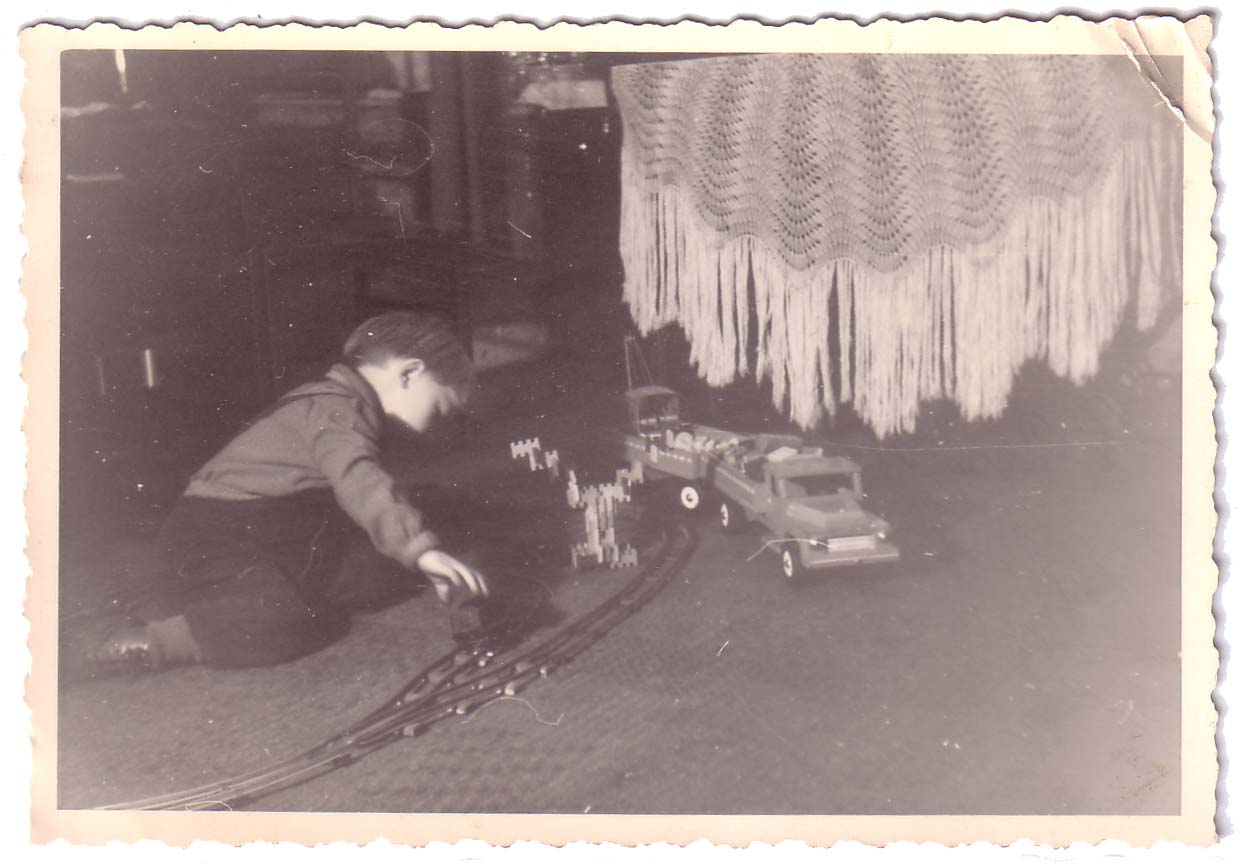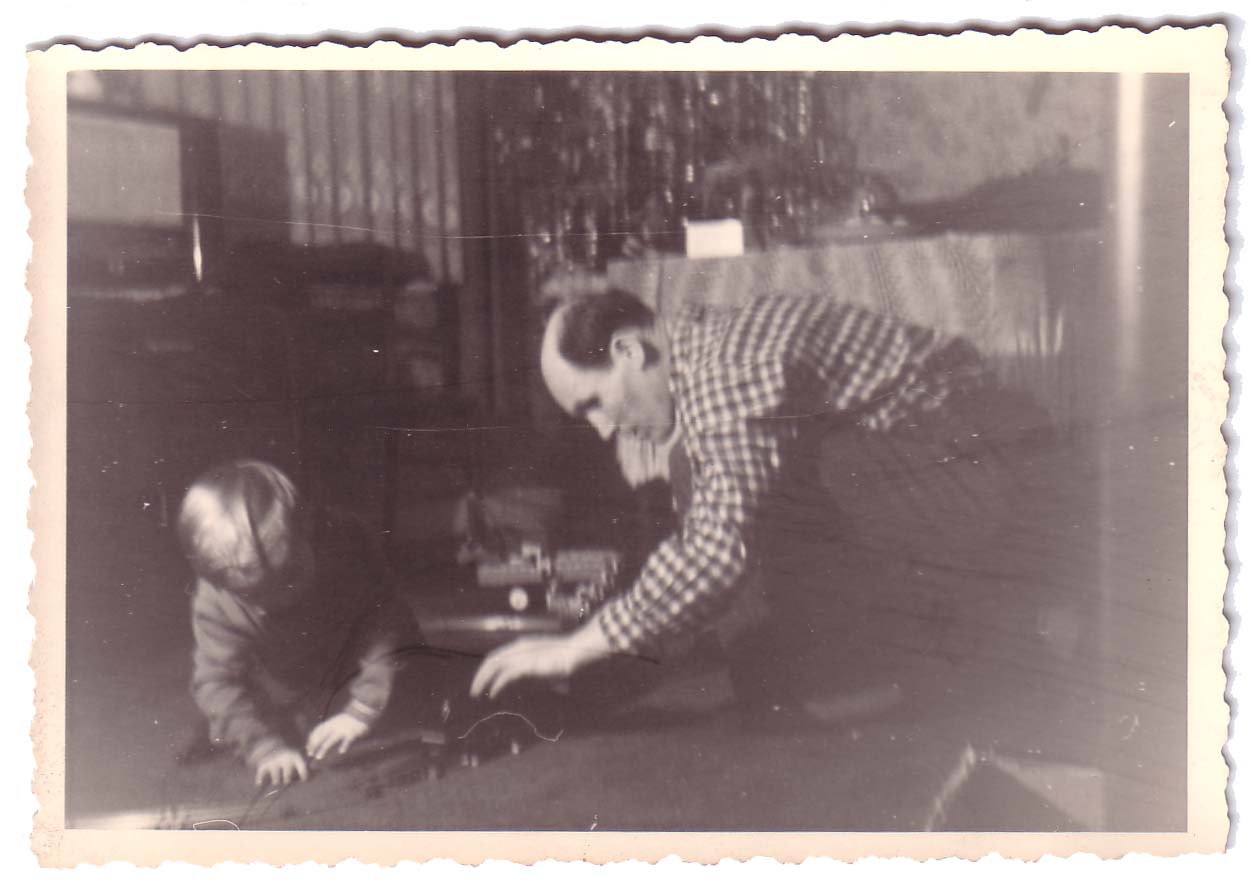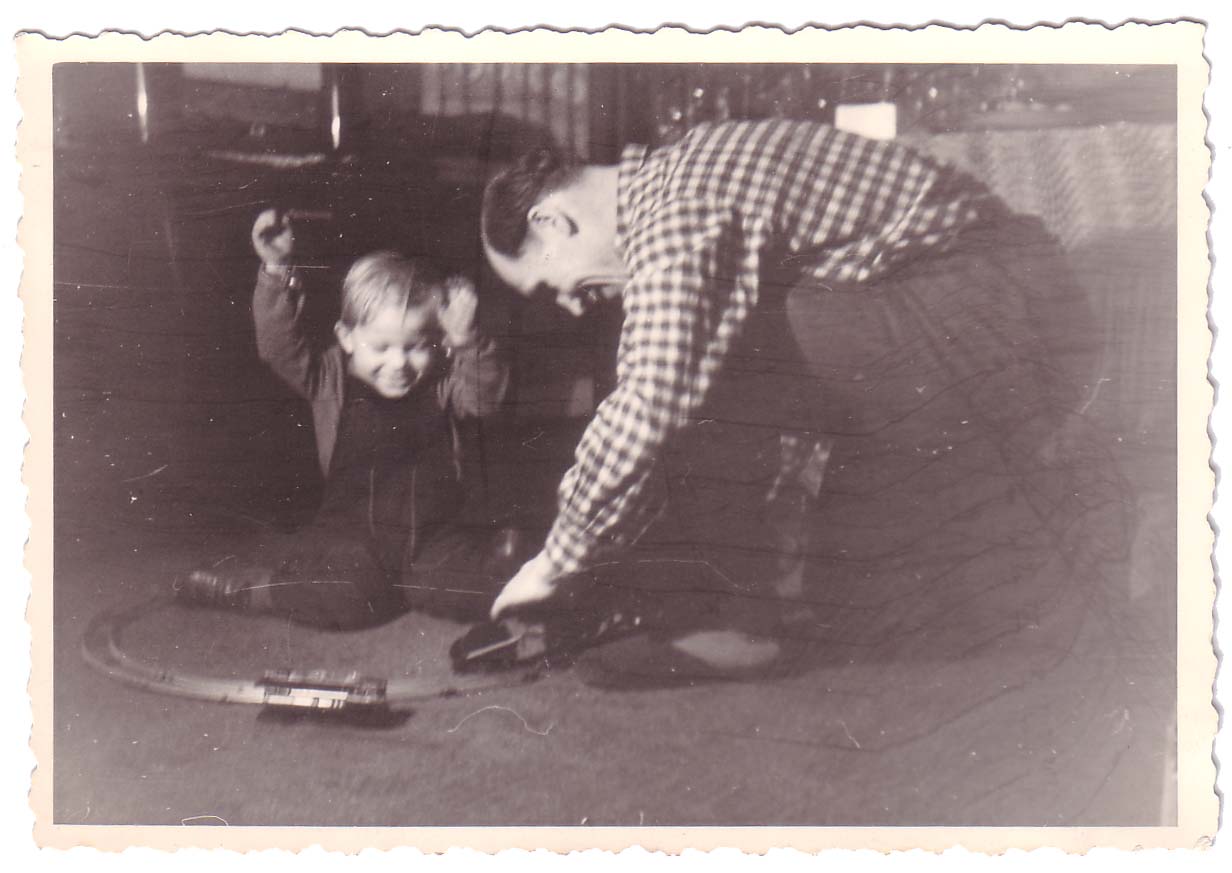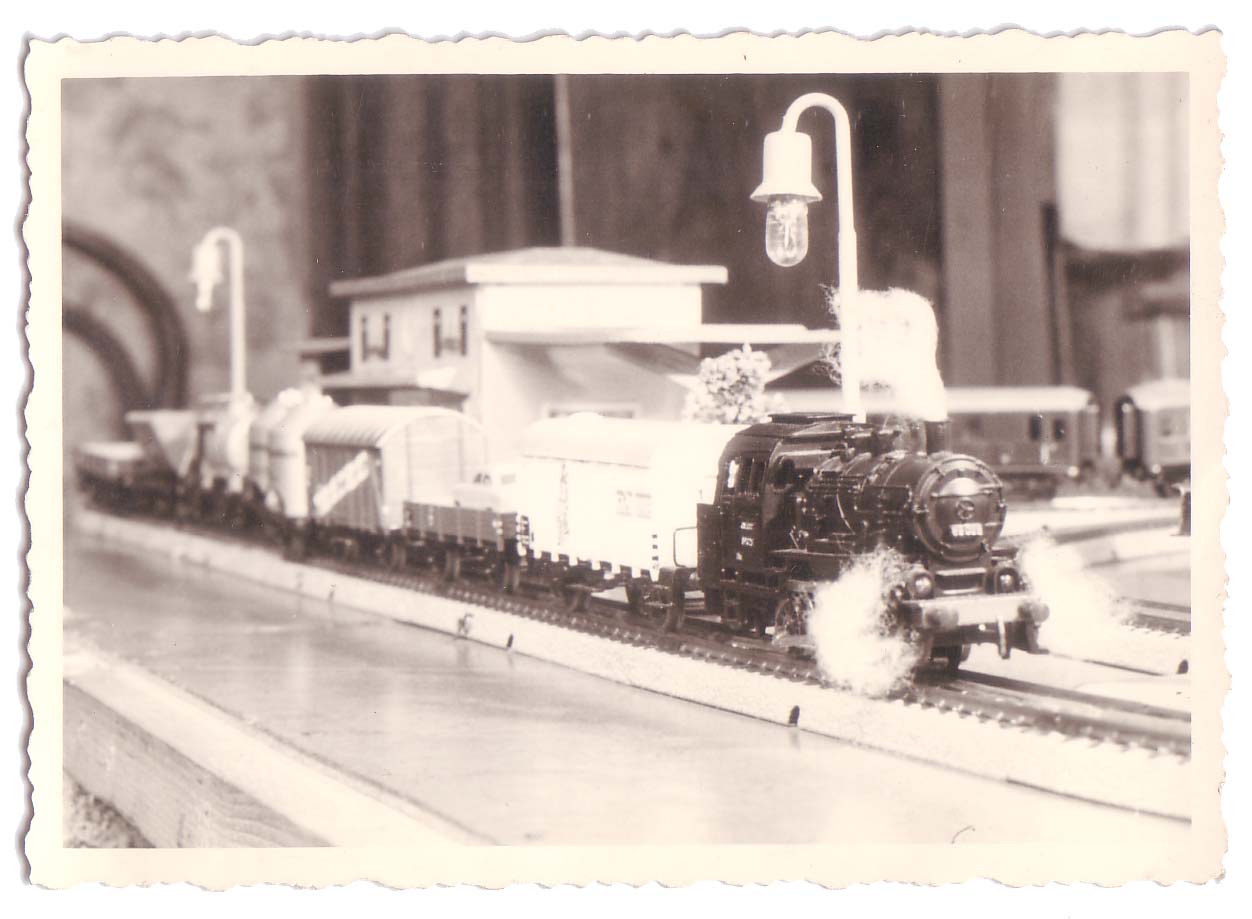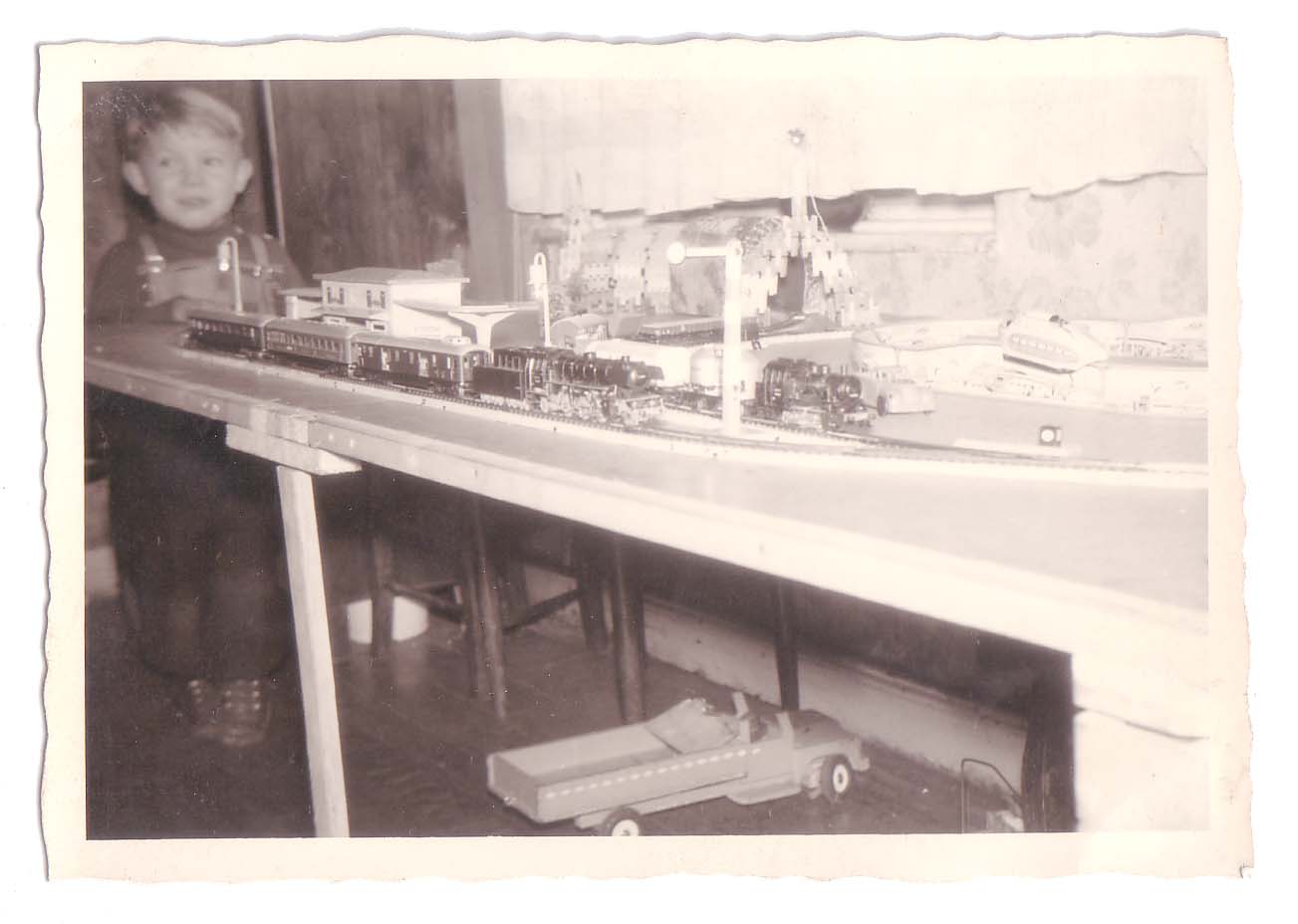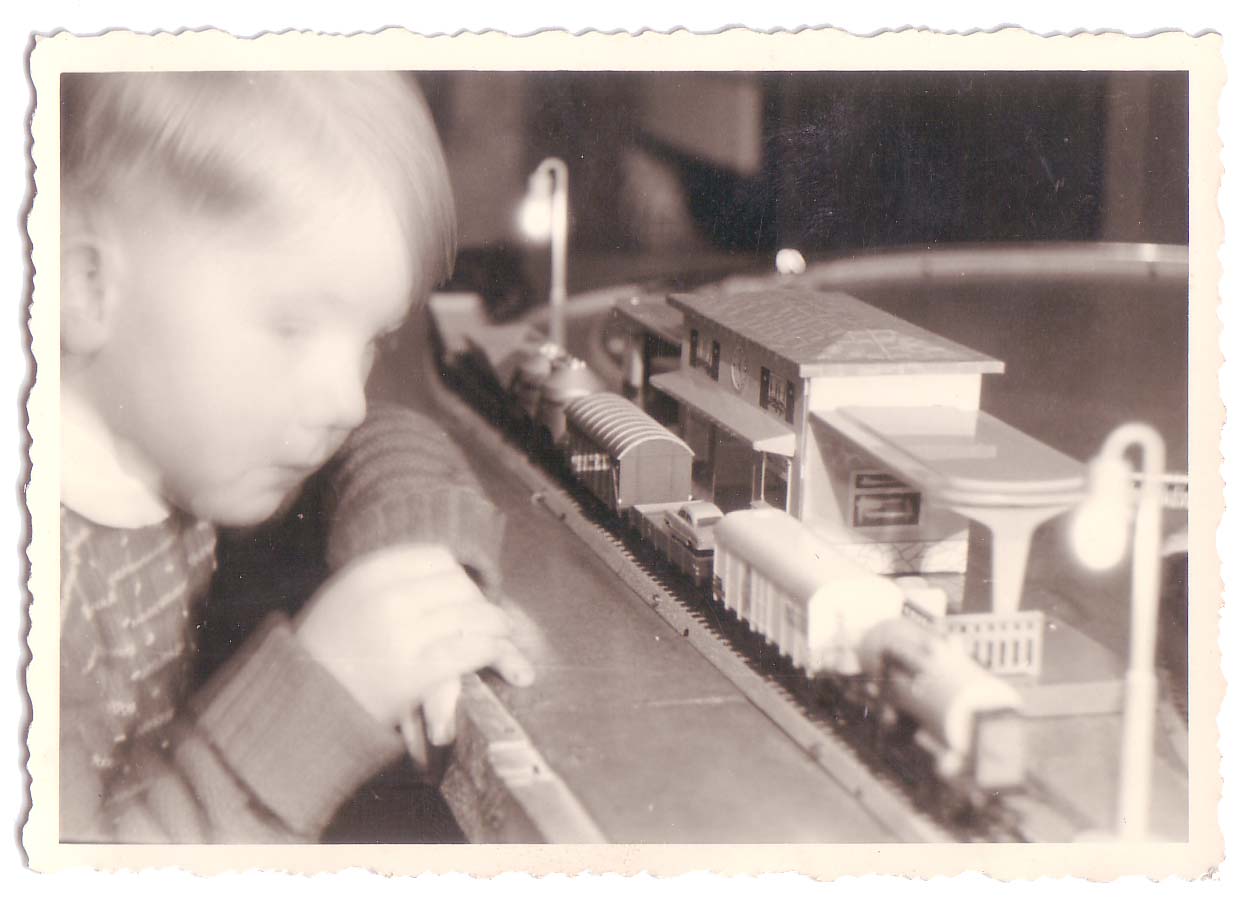
The holidays sometimes give us the opportunity to dig a bit into the past by looking into some old photo albums. In doing so, I got reminded of my good old Märklin trains I had when I was a little kid. On my trip down memory lane, I dug out those old pictures and even came up with some pre-Maerklin documents.
Doesn’t seem that long ago, and now I have my successor already older than I was in these pictures. I guess I will have to equip him with some trains of his own. What would be even better – Hello Universe, this is a request! – if I could manage to get my old trains back over here from a friend – Hello Hermann – who has kept them faithfully for so many years but whom I don’t seem to be able to reach anymore. But maybe this year he will answer our Christmas mail – just maybe.
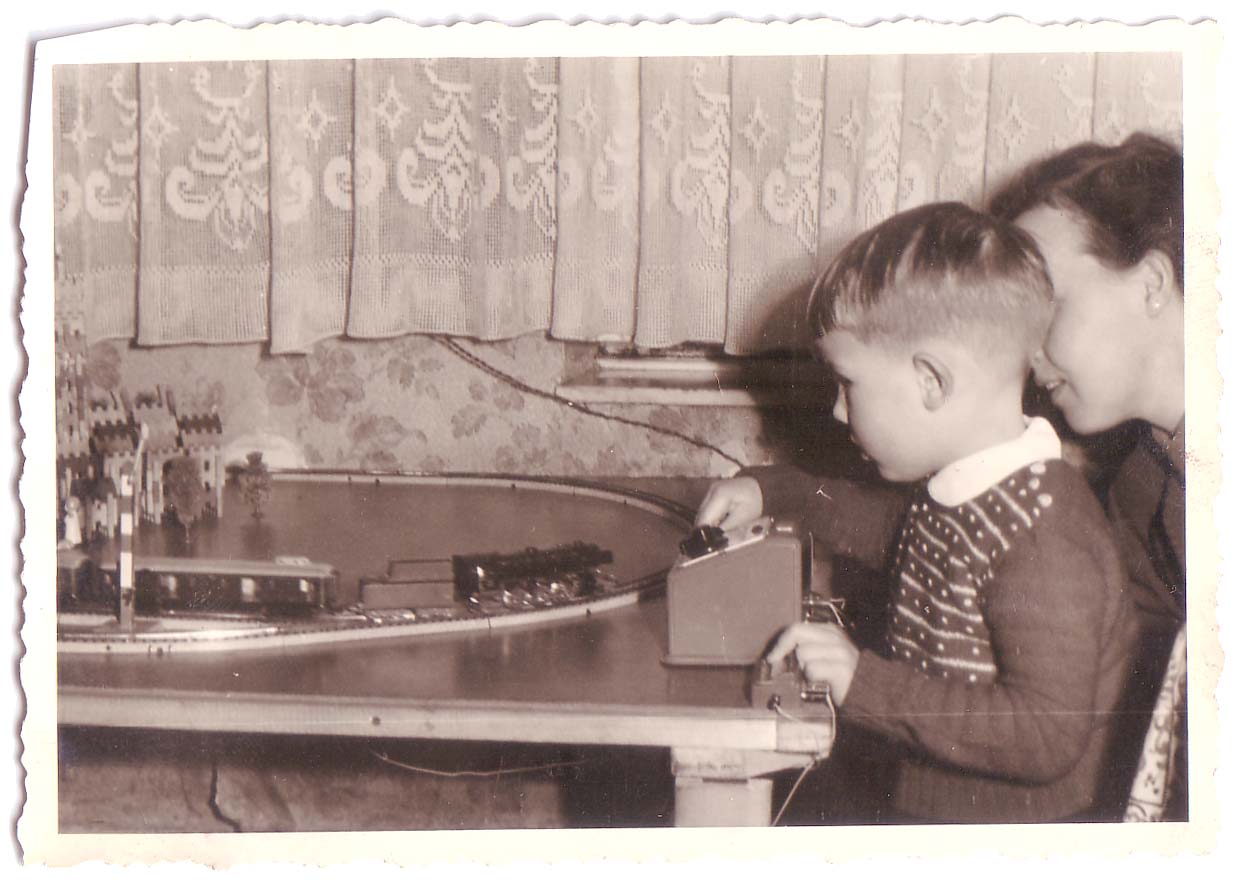
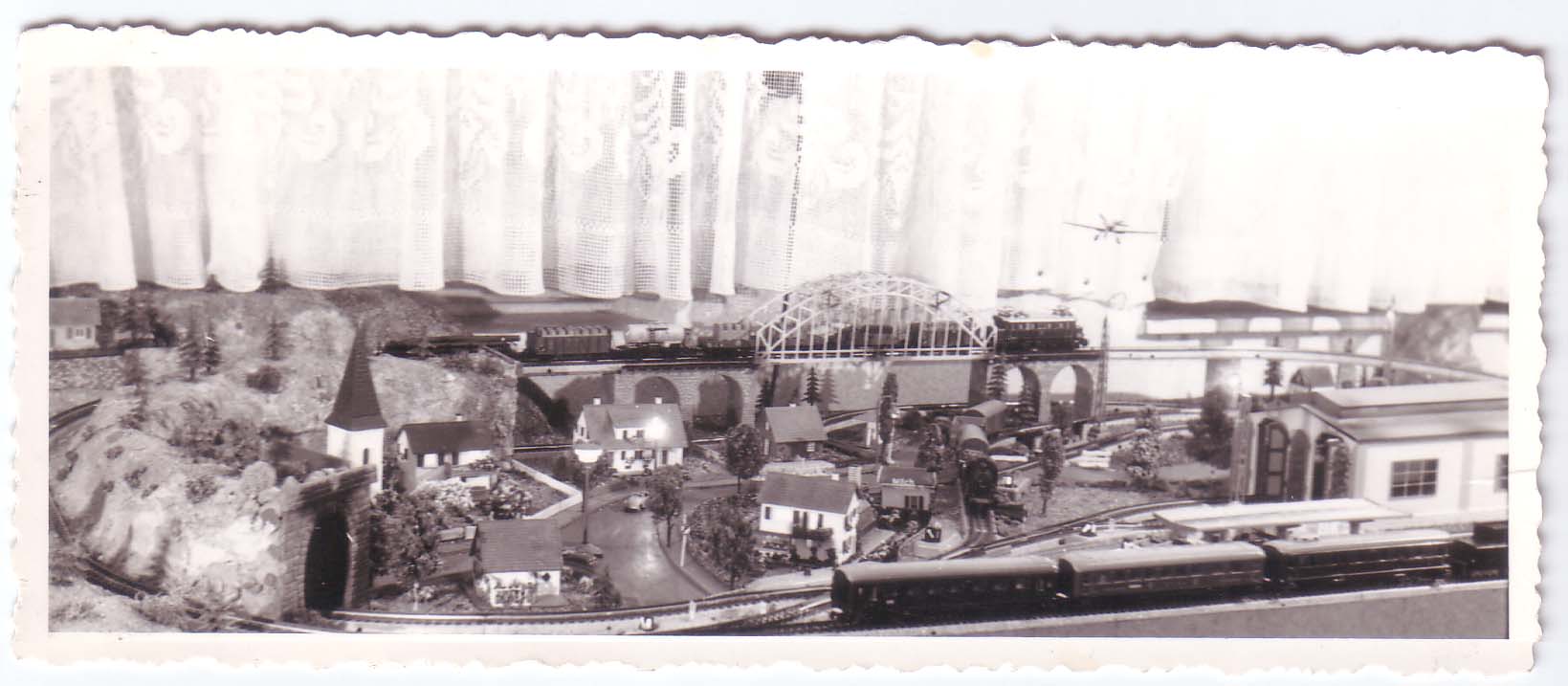
The following images first show the pre-Märklin era, then the early Märklin, and the nearly complete set. I am missing the last phase of the Märklin era, though. After the last image, a train station had been added, but I only have the pictures of that in my mind and no means (yet) to get them out on the internet.


Edit 2026: I revisited this article after a nasty hack of the website, with the effect of deleting all the images. Thanks to the Wayback Machine, I could get back many of them.
The last car of the little train in the middle of the next-to-last picture triggered an early memory to pop up: If you look closely, that car has tiny marker lights, indicating the end of a train. What I remembered was that for that purpose, that car had a central electricity pickup just like a locomotive.
Hard to imagine, but this whole system was analog; the big box you see in image 11 was the big blue Märklin transformer. The Märklin system ran on AC with a conductor in the center of the track, while the main competitor, TRIX (I believe), ran on DC with plus and minus fed to the locomotive through the two rails of the track. The central conductor on a Märklin track made the system less realistic but gave us electrical advantages: One long central pickup and all wheels that did not need to be insulated from each other made for much better contact. Changing direction did not require a change in polarity. Instead, the transformer button could be pushed down, which sent a slightly higher voltage to the tracks, triggering a relay in the locomotive – a double-push reversed the locomotive’s direction.