I start with the provocative thesis that the act of forgiving is egotistical.
A bit of background is in order.
Let us first establish the meaning of the words in the title of this essay:
The Forgiver is the one who has something to forgive, and the Forgivee is the one to whom forgiveness is granted because he is alleged to have done something to Forgiver that should warrant forgiving.
There are two levels to this business of forgiveness. The first is ‘granting pardon‘ to somebody who has done wrong. This “granting of pardon” should only be done if asked for and we are not obligated to forgive if there is no remorse that he as the perpetrator has done wrong. Dwayne, a wrangler turned YouTube celebrity-philosopher argues that point very succinctly.
The second element of forgiving concerns only the Forgiver, the Forgivee does not even have a role. This might be recognized in Jesus’ famous last words “Father, forgive them, for they do not know what they are doing.” At first glance, this seems to contradict the idea, that forgiveness should be only granted if asked for, and those Romans who nailed Jesus to the cross certainly did not ask for forgiveness.
In my interpretation, how the Forgiver sees himself is essential. Does he see himself as a victim or is he above and beyond being harmed? Jesus was not a victim, God is not a victim, so there is nothing even there to forgive.
Only if somebody does FEEL like a victim, even for something as mundane as being short-changed at the store, or somebody not waiting their turn in line at Starbucks, could make him BE a victim and demand an apology.
It is always our choice what we are and what effect we allow others to have on us. Looking for an apology is a sure sign that we allowed the perpetrator to turn us into a victim. I must strongly state that I don’t like to be a victim and I do not allow others to turn me into one. I do not disagree with Dwayne that forgiveness should only be granted if asked for, but for your own sake, demand an apology only to help the Forgivee become a more valuable member of society, and not because you “deserve” that “I’m sorry”.
My conclusion is to recognize that, if I feel that I have to forgive somebody for something, I already went off the rails.
Forgiving in itself, or the realization that no forgiving is due is thus very egotistical, as it makes me more free – and that, in turn, makes it so much easier to “Love Thy Neigbor as Thyself”.
Ernest Gibbons Captain Aaron Sheffield “Happy” Daze Proscribed Prisoner No. 83M2742 Mr. Justice Lenox Dr. Lafayette ‘Lafe’ Hubert Corporal Ted Bronson His Serenity Seraphim the Younger, Supreme High Priest of the One God in All His Aspects and Arbiter Below and Above.
(You may listen to the story below, read it – if you can – or emerse yourself completely by listening and reading along…)
In the early 60s (of the last century) my parents bought a little vacation retreat in Spain some 80 kilometers down the coast from Barcelona. My dad really wanted it partially because it was sold as an investment to make money. Looking back, it might have been the leading edge of the wave of today’s timeshares. Mom thought it was a scam and had written off the FIVE-THOUSAND Marks (!) – a huge investment for my parents at that time when the monthly mortgage for their house was one hundred and twenty-seven marks.
But it turned out to be real, and my parents got themselves a ‘bungalow’ 1700 km away from home. That was quite a trip at a time when only Germany had its Autobahn, but there were no other freeways in France and Spain on the way to ‘Torredembarra’ to speak of.
I spend quality time there on several occasions – I considered it my second home. Took my first big love there right after we met and took her there shortly before she dumped me.
Then I took my next big love, occasionally she was a bit jealous because she was not the first one there with me, but it all turned out OK because the last ever trip to Spain, before we left Europe altogether for a new adventure in the new world, was with her as my wife. It was a surprise visit to my parents who now spend several months at a time in a better climate than the one in the middle of Germany.
My wife and I had gotten caught up in a cult in the good old US of A. My entanglement only lasted about a year, but it cost me my marriage and the poor wife is still in there as far as I know. Escaping the cult, with my tail between my legs, I went home to my parents – at least I wanted to, but when I was just breaking all the bridges with the cult behind me I received a letter (yes, that was a thing) from my parents, that they were about to get on the way to Spain.
So, no going back to my parents! The alternative was to go to the parents-in-law, who still loved me and whom I still loved, and who were probably were not quite aware of the circumstances that had developed in California.
Just getting out of a cult, finances were rather tight, but to my credit, I have to say that I never was one of those cult members who immediately gave everything to the guru. I still had my Ford LTD station wagon, safely (or so I thought) parked in the public parking of the cult, and I had maintained my own bank account with some green-bucks. Still, I got the cheapest flight to Europe. $225 on People Express to Amsterdam. All went well getting into Shiphol, but I had not considered that there would be a problem to rent a car to cross the border from Holland to Germany. The only viable solution I found was to take a Lufthansa flight from Shiphol to Hannover, about 330 km for nearly the same price as the flight from LA to Amsterdam.
In Hannover, I could rent a car and so I finally arrived at my in-laws, disillusioned by the cult, with many broken dreams, without my wife, and a really bad case of athletes foot from the cult’s community showers.
During the three weeks it took me to bring back my feet to good health, I built myself up emotionally, started to make plans for the future, and got ready to finally visit my parents.
In Bielefeld, I got on the train to Spain – on the Train to Spain – hmm, that rhymes!
Flying was not really an option, as at that time – the later part of the 80s – cheap city-to-city flights had not been invented, and Lufthansa to Barcelona would have strained my resources too much. So, it was two days of rocking and shaking trains, only sometimes with a seat all for myself, but also sometimes curling up on my suitcase in the gangway connection between two cars, in an attempt to get some shut-eye.
After many different trains at many different railway stations, I finally got off at the train station in Torredembarra, Spain. I invested a few Pesetas for a taxi ride to my parents’ bungalow. I only knew how to get there but did not know any address, so I had to tell the driver, left here, then right, then left again, and so on. I really never knew the official address of the house, but it had a number – later photos indicated that it was something like 35 II, and the street something like ‘Clara del Sol’. But my Spanish was good enough for ‘a la izquierda’ and ‘a la derecha’.
It was quite some surprise – they imagined me in California, in fact, had sent a letter there a few weeks ago, and waiting for an answer, and there this guy gets out of a cab in front of their house in a little cul-de-sac.
And that should be my last time in Spain in that little bungalow. Eventually, I made it back to California and rebuild my life, something that might deserve a few other stories.
A few years after these events, my parents sold the little house but some good memories stayed with me. With the advent of Google Maps and street view, I tried a few times to re-trace my way from the train station to our little sanctuary, but there were so many changes that I did not recognize the area anymore and just could not find that little cul-de-sac.
Until – yesterday! A little village a bit off the coast, and as such mostly left alone by tourists in the initial waves of German vacationers, had been our place of choice for shopping for groceries and wine. Pobla de Montornes itself was also unrecognizable for me on Street View, but the road connecting Pobla and Torredembarra was there and not likely changed during the last forty years, so I – virtually – drove this road from Pobla down towards the coast. I knew that I had to take a turn left to get to our little street, but all the streets going left looked unfamiliar, and I had tried in the past to just follow them but always had ended up in completely unfamiliar territory.
Again – until yesterday! I must have dismissed that left turn-off previously, but following it this time, things looked more familiar. And – suddenly – I stood in front of ‘our bungalow’. Sure, a garage had been added, the fence had been upgraded, the street number had changed, and vegetation was totally different, but it was undoubtedly ‘our house’.
The Google car even caught an older couple in the yard, which could have been my parents, but aren’t. Should they have been reborn, they would be much younger, and I don’t think they would go back to the place that made them work really hard initially.
In order to never ever lose that location, I put it on the internet, because nothing ever gets lost on the internet.
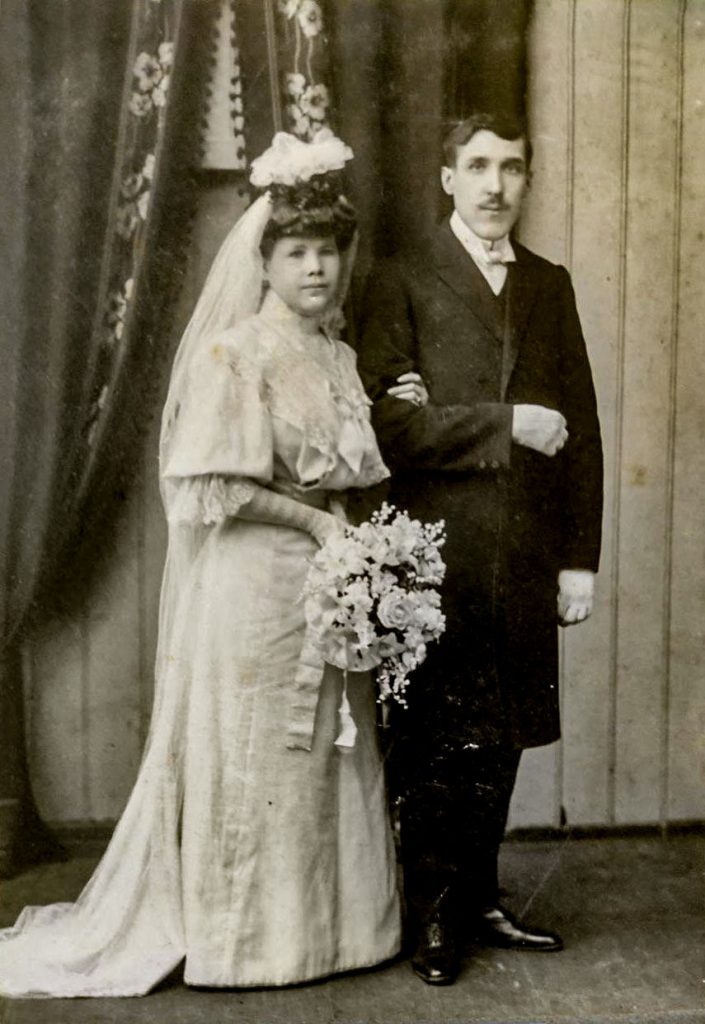
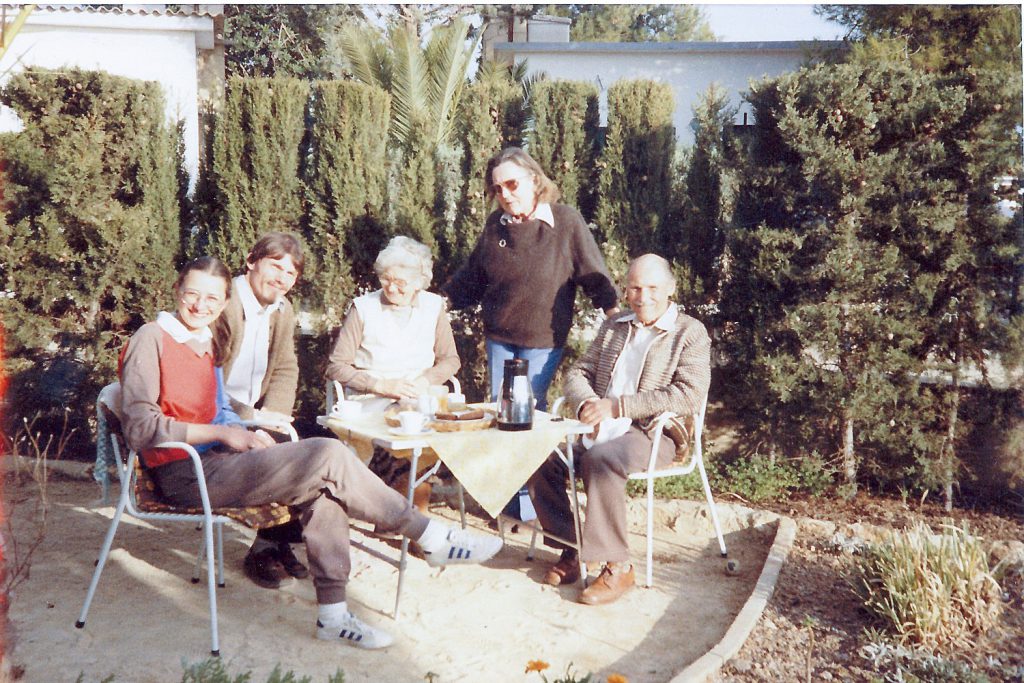
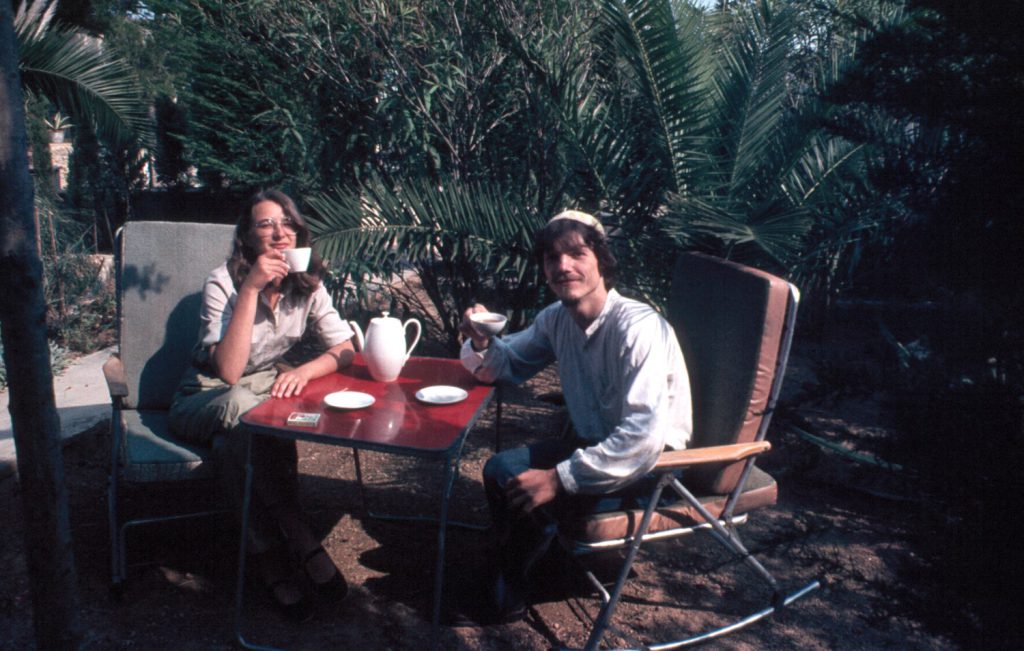
Karin and yours truly visiting the parents in Clara – mid 80sPlantation Owners – early 80sThen Clara del Sol 35 II – now Carrer de Fortuny 9 – early 80sYours Truly – end 70sYours truly in 1974 during a 2-month stayWhat a difference a few years of working makes – Late 60s‘The Bungalow’ at the time of purchase – mid 60s
(A little gem I found in the couch cushions of my hard drive)…
Ladies and gentlemen of the class of ’98:
Wear sunscreen.
If I could offer you only one tip for the future, sunscreen would be it. The long-term benefits of sunscreen have been proved by scientists, whereas the rest of my advice has no basis more reliable than my own meandering experience. I will dispense this advice now.
Enjoy the power and beauty of your youth. Oh, never mind. You will not understand the power and beauty of your youth until they’ve faded. But trust me, in 20 years, you’ll look back at photos of yourself and recall in a way you can’t grasp now how much possibility lay before you and how fabulous you really looked. You are not as fat as you imagine.
Don’t worry about the future. Or worry, but know that worrying is as effective as trying to solve an algebra equation by chewing bubble gum. The real troubles in your life are apt to be things that never crossed your worried mind, the kind that blindside you at 4 pm on some idle Tuesday.
Do one thing every day that scares you.
Sing.
Don’t be reckless with other people’s hearts. Don’t put up with people who are reckless with yours.
Floss.
Don’t waste your time on jealousy. Sometimes you’re ahead, sometimes you’re behind. The race is long and, in the end, it’s only with yourself.
Remember compliments you receive. Forget the insults. If you succeed in doing this, tell me how.
Keep your old love letters. Throw away your old bank statements.
Stretch.
Don’t feel guilty if you don’t know what you want to do with your life. The most interesting people I know didn’t know at 22 what they wanted to do with their lives. Some of the most interesting 40-year-olds I know still don’t.
Get plenty of calcium. Be kind to your knees. You’ll miss them when they’re gone.
Maybe you’ll marry, maybe you won’t. Maybe you’ll have children, maybe you won’t. Maybe you’ll divorce at 40, maybe you’ll dance the funky chicken on your 75th wedding anniversary. Whatever you do, don’t congratulate yourself too much, or berate yourself either. Your choices are half chance. So are everybody else’s.
Enjoy your body. Use it every way you can. Don’t be afraid of it or of what other people think of it. It’s the greatest instrument you’ll ever own.
Dance, even if you have nowhere to do it but your living room.
Read the directions, even if you don’t follow them.
Do not read beauty magazines. They will only make you feel ugly.
Get to know your parents. You never know when they’ll be gone for good.
Be nice to your siblings. They’re your best link to your past and the people most likely to stick with you in the future.
Understand that friends come and go, but with a precious few you should hold on. Work hard to bridge the gaps in geography and lifestyle, because the older you get, the more you need the people who knew you when you were young.
Live in New York City once, but leave before it makes you hard.
Live in Northern California once, but leave before it makes you soft.
Travel.
Accept certain inalienable truths: Prices will rise. Politicians will philander. You, too, will get old. And when you do, you’ll fantasize that when you were young, prices were reasonable, politicians were noble, and children respected their elders.
Respect your elders.
Don’t expect anyone else to support you. Maybe you have a trust fund. Maybe you’ll have a wealthy spouse. But you never know when either one might run out.
Don’t mess too much with your hair or by the time you’re 40 it will look 85.
Be careful whose advice you buy, but be patient with those who supply it. Advice is a form of nostalgia. Dispensing it is a way of fishing the past from the disposal, wiping it off, painting over the ugly parts, and recycling it for more than it’s worth.
The following story was written by Francie Baltazar-Schwartz and I re-discovered it in my ‘nice-stuff’ folder. I thought it might be better out here on the web than in the crevices of my computer. Hope you enjoy it as much as I do…
Jerry was the kind of guy you love to hate. He was always in a good mood and always had something positive to say. When someone would ask him how he was doing, he would reply, “If I were any better, I would be twins!”
He was a unique manager because he had several waiters who had followed him around from restaurant to restaurant. The reason the waiters followed Jerry was because of his attitude. He was a natural motivator. If an employee was having a bad day, Jerry was there telling the employee how to look on the positive side of the situation.
Seeing this style really made me curious, so one day I went up to Jerry and asked him, “I don’t get it! You can’t be a positive person all of the time. How do you do it?” Jerry replied, “Each morning I wake up and say to myself, ‘Jerry, you have two choices today. You can choose to be in a good mood or you can choose to be in a bad mood.’ I choose to be in a good mood. Each time something bad happens, I can choose to be a victim or I can choose to learn from it. I choose to learn from it. Every time someone comes to me complaining, I can choose to accept their complaining, or I can point out the positive side of life. I choose the positive side of life.”
“Yeah, right, it’s not that easy,” I protested.
“Yes, it is,” Jerry said. “Life is all about choices. When you cut away all the junk, every situation is a choice. You choose how you react to situations. You choose how people will affect your mood. You choose to be in a good mood or bad mood. The bottom line: It’s your choice how you live life.”
I reflected on what Jerry said. Soon thereafter, I left the restaurant industry to start my own business. We lost touch, but I often thought about him when I made a choice about life instead of reacting to it. Several years later, I heard that Jerry did something you are never supposed to do in a restaurant business: he left the back door open one morning and was held up at gunpoint by three armed robbers. While trying to open the safe, his hand, shaking from nervousness, slipped off the combination. The robbers panicked and shot him. Luckily, Jerry was found relatively quickly and rushed to the local trauma center. After 18 hours of surgery and weeks of intensive care, Jerry was released from the hospital with fragments of the bullets still in his body.
I saw Jerry about six months after the accident. When I asked him how he was, he replied, “If I were any better, I’d be twins. Wanna see my scars?”
I declined to see his wounds but did ask him what had gone through his mind as the robbery took place. “The first thing that went through my mind was that I should have locked the back door,” Jerry replied. “Then, as I lay on the floor, I remembered that I had two choices: I could choose to live, or I could choose to die. I chose to live.”
“Weren’t you scared? Did you lose consciousness?” I asked.
Jerry continued, “The paramedics were great. They kept telling me I was going to be fine. But when they wheeled me into the emergency room and I saw the expressions on the faces of the doctors and nurses, I got really scared. In their eyes, I read, ‘He’s a dead man.’ “I knew I needed to take action.”
“What did you do?” I asked.
“Well, there was a big, burly nurse shouting questions at me,” said Jerry. “She asked if I was allergic to anything. ‘Yes,’ I replied. The doctors and nurses stopped working as they waited for my reply. I took a deep breathe and yelled, ‘Bullets!’ Over their laughter, I told them. ‘I am choosing to live. Operate on me as if I am alive, not dead.”
Jerry lived thanks to the skill of his doctors, but also because of his amazing attitude. I learned from him that every day we have the choice to live fully. Attitude, after all, is everything.
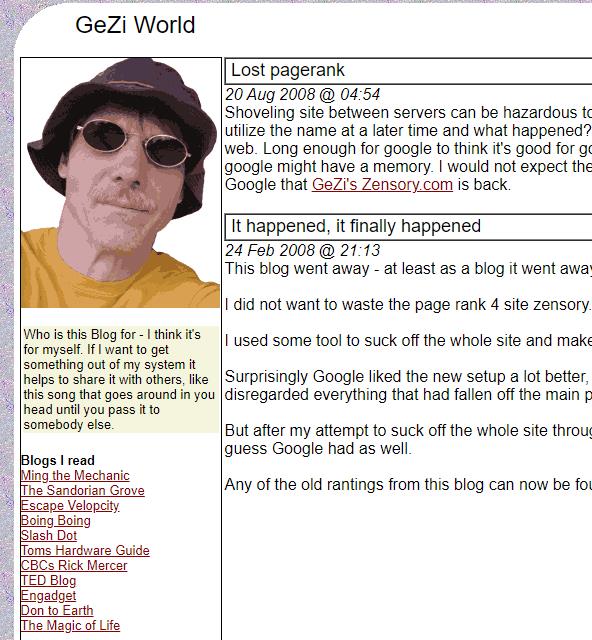
There were internet providers – the first one for me was, if I remember correctly, Primenet – from which you could get a few MB of space for your own website. That was at a time when you often saw the notice “This site best viewed with Netscape Navigator” on these very web pages. Even though Al Gore had invented the internet he had not yet given us good guidelines on how to consistently access it with predictable results. It was sweet anarchy.
Newciv.org broke into this climate. This was a simple Intel (probably) 386 computer with a modem as a connection to that World Wide Web. Hardly any private person could afford a permanent internet connection, so a dial-up line had to do. With an automatic re-dial when the connection was lost and a repeated access to some page at the provider in order to avoid being hung up due to non-activity.
Flemming had written a whole suite of software that ran the New Civilization Network but I encountered that server initially in Max’s office. It was exciting, there you had this computer to which all of the outside worlds had access, could create accounts, and could communicate.
Part of the software suite was blogging software, and did we blog!
Flemming – obviously – had the very first post. And believe it or not, it is still there:
Article _a000010-000001.htm – there sure was room for expansion. The reason this blog is still working perfectly is that Flemming kept the domain ming.tv pointing to his blog on the NewCiv server. Some of us had our own domains pointing to our blogs. Max Sandor’s was the Sandorian Grove – sandorian.us. Mine was zensory.com – for whatever reason – I guess it was a cool domain name. Max’s domain was later repurposed and eventually went away when Max went on to greener pastures.
But if you know the internal structure of NewCiv – as Flemming does – that blog is still there, even with many broken links due to the fact that sandorian.us does not exist any longer: http://newciv.org/nl/newslog.php/_v245/__show_log/
My zensory.com first turned into a WordPress blog – on my own server in a data center, obviously connected to some faster backbone. It needs to be said, that at that time (and is still todady), the NewCiv server was co-located in a data center as well, not requiring a dial-up connection to the internet any longer.
Flooded with sweet nostalgia, I looked over that old blog and noticed the blog roll (blogs that I followed) in the sidebar. The one that caught my attention was Don To Earth – at that time he was touted as the oldest blogger. His blog was hosted on Blogspot, a free-for-all open blog. The nice thing about those free platforms is that they don’t go away. Not like a privately hosted blog that goes away when the person paying for it every month finds better things to do and leaves this realm (as, inevitably, this blog will go away when I do).
Not only are original ink cartridges expensive, but HP LaserJet toners can also cost about the same as the printer itself. You still would buy the toner cartridges because the ones that come with a new printer have reduced capacity.
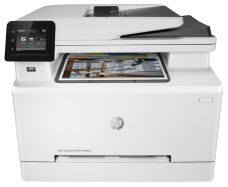
So the obvious choice is to use third-party cartridges at often less than half the price. That worked well for my all-in-one HP LaserJet Pro M281 with cartridges from LDProducts.com – until it did not, anymore.
HP had installed a firmware update on my printer that disabled the after-market cartridges, and I now got an error message that there was a “Supply Problem”. I had not immediately noticed that something wasn’t working anymore because I don’t print much and there had been days between the update and the first time I saw the “Supply Problem.”
A bit of googling gave me the hint that this problem might be caused by the latest update which was dated 20201021. The obvious course of action was to go back to the last version of the firmware – but this became a few-day quest.
The printer was out of warranty, so getting direct support from HP was not an option, so I resorted to the community support forum. Answers to my post confirmed that this was not only my problem but that others were hit by this “update bug.”
A bit further googling got me the info that the firmware version 20200612 was a good version and that I just had to find that version for my printer model.
But that was not an easy task, and it nearly appears to be intention of HP to suppress that version. One user who answered my post mentioned that two years ago HP had reached a settlement in a class-action suit when it had disabled its inkjet printers that were using 3rd party ink cartridges, and wondered if it’s time for another class action suit – – and he got banned from the forum for that for a day.
But before he got banned I had seen the post and looked up that lawsuit, and – just for the fun of it – left the firm a message that there might be some more HP shenanigans going on. – I have not heard back from them.
That same user had managed to find the right firmware file for his printer model, HP_Color_LaserJet_Pro_M254_dw_Printer_series_20200612.exe, on HP’s website and had been successful in downgrading his printer software and had his machine working again.
I wasn’t quite as lucky, as that file had been removed from the HP website the very day, but with parts of the file name and good old Google I found the file somewhere in the far reaches of the internet. I tried to run it several times, with cartridges in, without, after unplugging the printer for a few minutes to reset, to no avail, until it dawned on me that his model was not exactly the same as mine and that I probably needed different firmware, specific for my M281 printer.
After more extensive googling I found that the name of the right file should be HP_LaserJet_Pro_M280_M281_Printer_series_20200612 but no executable with that, or similar, name was to be found. The only thing that came close was exactly that file name but with a .rfu extension which probably stands for ‘remote file updated.’ I actually found that info on an HP page.
I had no idea how to use that file. Windows does not know what to do with a file with that extension and I had no idea how to run it or with what application.
Again Google to the rescue.
I finally found it – and it was simpler than I thought. The reason I write this post, just in case somebody runs into the same problem, is that you might not need to spend so many hours with friendly Google.
First of all, I will leave this update file here so you can download it. I had to obfuscate and zip it so that I can upload it here and possibly hide it from HP. Once you have downloaded the zip file, just extract the file inside it and rename it to M280_M281_firmware_20200612.rfu and follow the following steps:
The printer needs to be accessible as a share. My printer was not shared so I just created a share for it as \\MYCOMPUTER\M281 – in case you need help to do this – Google is your friend “How to share a printer.” Replace MYCOMPTER with the real name of the machine you are sitting at.
Then open a command line window and type copy /b M280_M281_firmware_20200612.rfu \\MYCOMPUTER\M281
This command finishes surprisingly fast, but the printer then started a lengthy install of that firmware. It took a while – maybe five minutes, while the printer display showed progress and messages ‘programming’.
When it was all done, the printer restarted and the “Supply Problem” was gone.
That’s it – following this my printer is deserving its name again – it prints!
I am happy – but shame on HP!
PS: I wonder if I ever hear back from that law firm regarding a class action…
PPS: I got a message from Jonathan who followed the instructions and was happy to report that he did not have to discard his HP printer. He suggested that you also disable the update feature in the printer to avoid the problem as much as possible in the future.
For this you
go to Setup on your printer’s LCD display (the last one)
Scroll down to Service and select it
Scroll down to LaserJet Update and select it
Select Manage Updates
Select Allow Updates
Select No
Go Back to Home
I don’t know how safe that is because I seem to remember that I set that when I installed my first set of 3rd party cartridges, but I think I was prompted to update by HP maintenance software installed and running on my computer. It was years since I had installed the cartridges and forgotten about the warning and so allowed the update.
Somehow I am more and more tending to follow the adage “If it ain’t broke, don’t fix it” when computer updates are concerned, especially firmware.