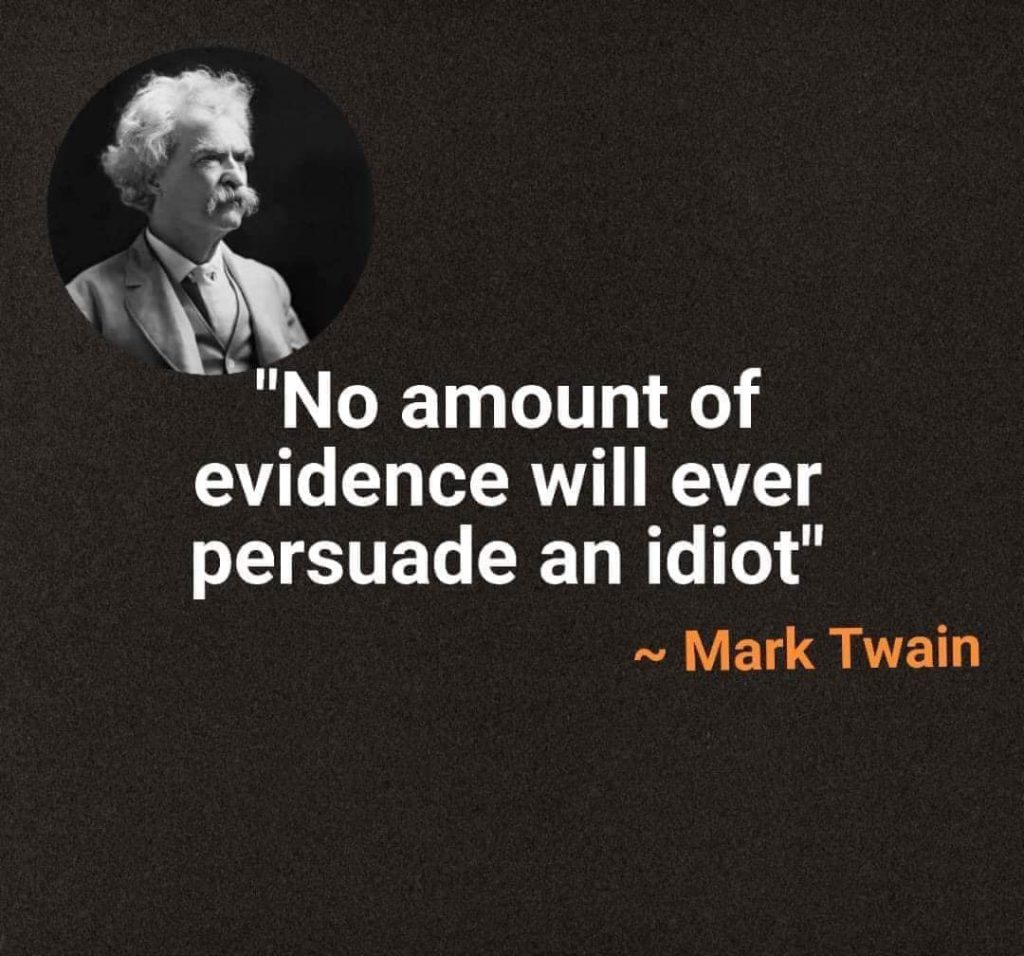
Mark Twain on Idiots
Leave a reply

One of my oldest WP blogs got hacked – yeah – I know – why do they do that?
I had kept everything nicely up-to-date, but as it was such an old blog, the password I had chosen when I set up the MySQL database for it initially, was – admittedly – cute, but not particularly secure.
So, I went to Ms. Google to find out how to change the password of my WP Database – but without luck. There were plenty of tutorials on how the change the password of a WP user – but that is easy, no need for a tutorial there.
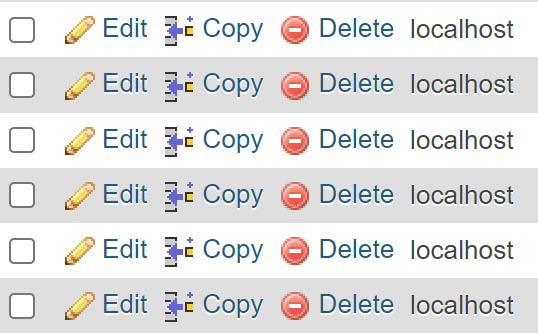
Learned quite a bit when I ran into some instructions on how to do this with the command line mysql command (you have to start the mysql service first), but still ran into a problem updating the password. But with the information from that post I finally managed to do it from phpMyAdmin.
Here we go:
… and to a big degree your son – we don’t want to be discriminative, do we?
(A little gem I found in the couch cushions of my hard drive)…
Ladies and gentlemen of the class of ’98:
Wear sunscreen.
If I could offer you only one tip for the future, sunscreen would be it. The long-term benefits of sunscreen have been proved by scientists, whereas the rest of my advice has no basis more reliable than my own meandering experience. I will dispense this advice now.
Enjoy the power and beauty of your youth. Oh, never mind. You will not understand the power and beauty of your youth until they’ve faded. But trust me, in 20 years, you’ll look back at photos of yourself and recall in a way you can’t grasp now how much
possibility lay before you and how fabulous you really looked. You are not as fat as you imagine.
Don’t worry about the future. Or worry, but know that worrying is as effective as trying to solve an algebra equation by chewing bubble gum. The real troubles in your life are apt to be things that never crossed your worried mind, the kind that blindside you at 4 pm on some idle Tuesday.
Do one thing every day that scares you.
Sing.
Don’t be reckless with other people’s hearts. Don’t put up with people who are reckless with yours.
Floss.
Don’t waste your time on jealousy. Sometimes you’re ahead, sometimes you’re behind. The race is long and, in the end, it’s only with yourself.
Remember compliments you receive. Forget the insults. If you succeed in doing this, tell me how.
Keep your old love letters. Throw away your old bank statements.
Stretch.
Don’t feel guilty if you don’t know what you want to do with your life. The most interesting people I know didn’t know at 22 what they wanted to do with their lives. Some of the most interesting 40-year-olds I know still don’t.
Get plenty of calcium. Be kind to your knees. You’ll miss them when they’re gone.
Maybe you’ll marry, maybe you won’t. Maybe you’ll have children, maybe you won’t. Maybe you’ll divorce at 40, maybe you’ll dance the funky chicken on your 75th wedding anniversary. Whatever you do, don’t congratulate yourself too much, or berate yourself either. Your choices are half chance. So are everybody else’s.
Enjoy your body. Use it every way you can. Don’t be afraid of it or of what other people think of it. It’s the greatest instrument you’ll ever own.
Dance, even if you have nowhere to do it but your living room.
Read the directions, even if you don’t follow them.
Do not read beauty magazines. They will only make you feel ugly.
Get to know your parents. You never know when they’ll be gone for good.
Be nice to your siblings. They’re your best link to your past and the people most likely to stick with you in the future.
Understand that friends come and go, but with a precious few you should hold on. Work hard to bridge the gaps in geography and lifestyle, because the older you get, the more you need the people who knew you when you were young.
Live in New York City once, but leave before it makes you hard.
Live in Northern California once, but leave before it makes you soft.
Travel.
Accept certain inalienable truths: Prices will rise. Politicians will philander. You, too, will get old. And when you do, you’ll fantasize that when you were young, prices were reasonable, politicians were noble, and children respected their elders.
Respect your elders.
Don’t expect anyone else to support you. Maybe you have a trust fund. Maybe you’ll have a wealthy spouse. But you never know when either one might run out.
Don’t mess too much with your hair or by the time you’re 40 it will look 85.
Be careful whose advice you buy, but be patient with those who supply it. Advice is a form of nostalgia. Dispensing it is a way of fishing the past from the disposal, wiping it off, painting over the ugly parts, and recycling it for more than it’s worth.
But trust me on the sunscreen.
Anarchy is buying raw milk from your neighbor.
Anarchy is taking your son fishing without a license.
Anarchy is marriage without a license.
Anarchy is keeping 100% of your paycheck.
Anarchy is building a shed without a permit.
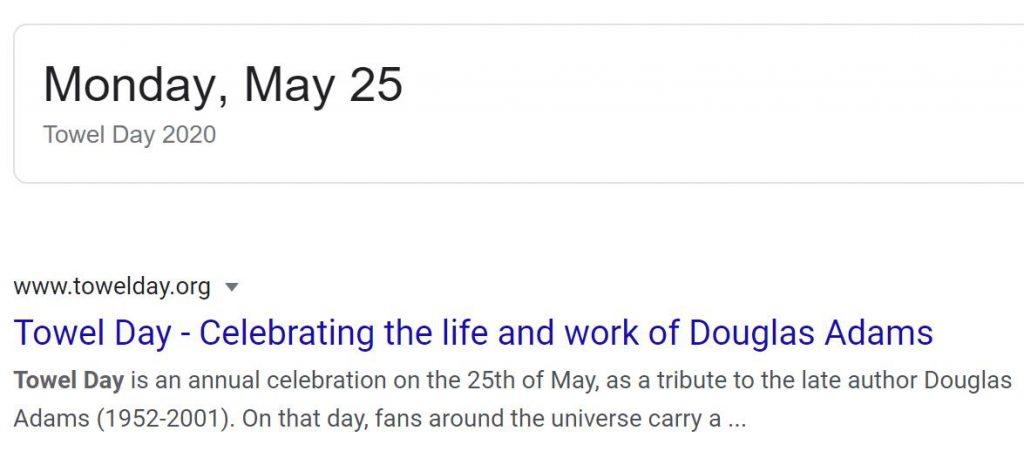
People in the know around the world recognize today – May 25th – as the day that made clear to all the importance of carrying a towel with you at all times.
Google is certainly aware of it
as is your’s truly

One thought I want to give to you on your way to life from now on. Ponder the question how you learn to fly…
… and get the mind-boggling answer: You throw yourself to the ground – – – – and miss!
Blows all your accepted reality to bits – doesn’t it?
DAVID BOHM: “Reality is what we take to be true. What we take to be true is what we believe. What we believe is based upon our perceptions. What we perceive depends on what we look for. What we look for depends on what we think. What we think depends on what we perceive. What we perceive determines what we believe. What we believe determines what we take to be true. What we take to be true is our reality.”
Nothing I can take credit for – mostly for me to remember at some point and enabling me to find it again.
 Sir Ernest Rutherford, President of the Royal Academy, and recipient of the Nobel Prize in Physics, related the following story: “Some time ago I received a call from a colleague. He was about to give a student a zero for his answer to a physics question, while the student claimed a perfect score. The instructor and the student agreed to an impartial arbiter, and I was selected.
I read the examination question: “Show how it is possible to determine the height of a tall building with the aid of a barometer.” The student had answered: “Take the barometer to the top of the building, attach a long rope to it, lower it to the street, and then bring it up, measuring the length of the rope. The length of the rope is the height of the building.”
The student really had a strong case for full credit since he had really answered the question completely and correctly! On the other hand, if full credit were given, it could well contribute to a high grade in his physics course and certify competence in physics, but the answer did not confirm this. I suggested that the student have another try. I gave the
student six minutes to answer the question with the warning that the answer should show some knowledge of physics. At the end of five minutes, he hadn’t written anything. I asked if he wished to give up, but he said he had many answers to this problem; he was just thinking of the best one. I excused myself for interrupting him and asked him to please go on. In the next minute, he dashed off his answer which read: “Take the barometer to the top of the building and lean over the edge of the roof. Drop the barometer, timing its fall with a stopwatch. Then, using the formula x=0.5*a*t^2, calculate the height of the building.”
At this point, I asked my colleague if he would give up. He conceded, and gave the student almost full credit. While leaving my colleague’s office, I recalled that the student had said that he had other answers to the problem, so I asked him what they were.
“Well,” said the student, “there are many ways of getting the height of a tall building with the aid of a barometer. For example, you could take the barometer out on a sunny day and measure the height of the barometer, the length of its shadow, and the length of the shadow of the building, and by the use of simple proportion, determine the height of the
building.”
“Fine,” I said, “and others?”
“Yes,” said the student, “there is a very basic measurement method you will like. In this method, you take the barometer and begin to walk up the stairs. As you climb the stairs, you mark off the length of the barometer along the wall. You then count the number of marks, and his will give you the height of the building in barometer units.” “A very direct method.”
“Of course. If you want a more sophisticated method, you can tie the barometer to the end of a string, swing it as a pendulum, and determine the value of g [gravity] at the street level and at the top of the building. From the difference between the two values of g, the height of the building, in principle, can be calculated.”
“On this same tack, you could take the barometer to the top of the building, attach a long rope to it, lower it to just above the street, and then swing it as a pendulum. You could then calculate the height of the building by the period of the precession”.
“Finally,” he concluded, “there are many other ways of solving the problem.”
“Probably the best,” he said, “is to take the barometer to the basement and knock on the superintendent’s door. When the superintendent answers, you speak to him as follows: ‘Mr. Superintendent, here is a fine barometer. If you will tell me the height of the building, I will give you this barometer.”
At this point, I asked the student if he really did not know the conventional answer to this question. He admitted that he did, but said that he was fed up with high school and college instructors trying to teach him how to think.
The name of the student was Niels Bohr.”
| Abendvorstellung | evening performance |
| Abgemacht! | It’s a bargain! |
| Abgemacht! | It’s a deal! |
| Alle Plaetze sind besetzt. | All seats are taken. |
| Allerdings! | With knobs on! |
| Alles zu seiner Zeit. | Everything at the proper time. |
| Angebot und Nachfrage | supply and demand |
| Angst haben vor | to be afraid of |
| Anwalt sein | to practise law |
| Arbeit suchen | to look for work |
| Armer Kerl! | Poor old chap! |
| Auch dem Aufmerksamsten entgeht manchmal etwas. | Homer sometimes nods. |
| Auf Ihr Wohl! | Here’s to you! |
| Auf Ihre Gesundheit! | Here’s to you! |
| Auf Peter wartet ein Freund. | Peter has a friend waiting to see him. |
| Auf gut Glueck. | Hit or miss. |
| Auf in den Kampf! | Go in and win! |
| Aufmerksamkeit erregen | to arrest attention |
| Aufnahmen machen | to take pictures |
| Aus welchem Grund? | For what reason? |
| Auswendig kann ich Ihnen nichts sagen. | I can’t tell you off-hand. |
| Autofahrer, der Fahrerflucht begeht | hit-and-run driver |
| Bargeld einnehmen | to take in cash |
| Bedeutung beimessen | to attach importance |
| Bedienungsanleitung | instruction manual |
| Beeil dich! | Make haste! |
| Behalt es fuer dich! | Keep it under your hat! |
| Beherrsch dich! | Keep your temper! |
| Bekennen Sie sich schuldig? | Do you plead guilty? |
| Belegschaft | work force |
| Bellende Hunde beissen nicht. | His bark is worse than his bite. |
| Bemuehe dich nicht! | Don’t bother! |
| Bescheid geben | to let know |
| Beschuldigen Sie nicht den Falschen! | Don’t put the saddle on the wrong horse! |
| Besorgungen machen | to run errands |
| Betrag erhalten | payment received |
| Beziehungen spielen lassen | to pull strings |
| Bitte bedenken Sie doch! | Pray, consider! |
| Bitte nachsenden! | Please forward! |
| Bitte raeumen Sie den Tisch ab! | Please clear the table! |
| Bitte seien Sie puenktlich. | Please be on time. |
| Bitte sorgen Sie dafuer, waehrend ich fort bin! | Please see to this while I’m away! |
| Bitten Sie sie herein. | Ask her in. |
| Bleiben Sie sachlich! | Stick to facts! |
| Bluehender Unsinn! | Rank nonsense! |
| Bringen Sie ihn doch nicht in Verlegenheit! | Spare his blushes! |
| Bringen Sie mir doch bitte mal die Geraete. | Bring me the tools,will you? |
| Buerokratismus | red tape |
| Bummelstreik | go-slow |
| Charly war durch und durch Student. | Charly was an out and out student. |
| Da hast du mich drangekriegt. | You’ve got me there. |
| Da hoert sich alles auf! | That beats everything! |
| Da irren Sie sich. | There you’re mistaken. |
| Da liegt der Hase im Pfeffer! | That’s the snag! |
| Da liegt der Hund begraben. | There’s the rub. |
| Da platzte mir der Kragen. | That was the last straw. |
| Da steckt mehr dahinter. | There’s more behind. |
| Dabei kann ich mich nicht recht entfalten. | It cramps my style. |
| Damit ist mir nicht gedient. | This won’t serve my turn. |
| Damit koennen Sie bei mir nicht landen. | That cuts no ice with me. |
| Danach kraeht kein Hahn. | Nobody cares two hoots about it. |
| Darauf kann er stolz sein. | That’s a feather in his cap. |
| Darf ich Ihnen behilflich sein? | Can I give you a hand? |
| Darueber laesst sich reden. | That’s a matter of argument. |
| Das Abendessen hat mir geschmeckt. | I enjoyed my supper. |
| Das Bild haengt schief. | The picture is crooked. |
| Das Ding ist gelaufen. | My goose is cooked. |
| Das Geld wird nicht reichen. | The money won’t last. |
| Das Leben besteht nicht nur aus Vergnuegen. | Life isn’t all beer and skittles. |
| Das Raetsel ist geloest. | The murder is out. |
| Das Thema kam nie zur Sprache. | The subject never came up. |
| Das Wetter haelt sich. | The weather keeps up. |
| Das Zimmer liegt nach Norden. | The room faces north. |
| Das bedeutet mir nichts. | That’s nothing to me. |
| Das bekommt mir nicht. | That doesn’t agree with me. |
| Das beleidigt mein Auge. | It offends my eye. |
| Das bleibt abzuwarten. | That remains to be seen. |
| Das dauert genauso lange. | That takes just as long. |
| Das duerfte Ihnen bekannt sein. | You’re probably aware of it. |
| Das erinnert mich an zu Hause. | This reminds me of home. |
| Das fuehrt zu nichts. | That will get you nowhere. |
| Das gehoert nicht zur Sache. | That’s beside the point. |
| Das gehoert sich nicht. | That’s just not done. |
| Das gehoert zu meiner Aufgabe. | That’s all part of my job. |
| Das geht Sie an. | This concerns you. |
| Das geht Sie nichts an. | That’s none of your business. |
| Das geht Sie nichts an. | That’s nothing to you. |
| Das geht auf keine Kuhhaut. | It beggars description. |
| Das geht auf meine Rechnung. | This is on me. |
| Das geht ueber meinen Horizont. | That’s over my head. |
| Das geht zu weit. | That’s going to far. |
| Das genuegt nicht. | This won’t do. |
| Das genuegt. | That will do. |
| Das gilt auch fuer Sie. | That applies to you too. |
| Das gilt auch fuer Sie. | That applies to you, too. |
| Das ging beinahe ins Auge. | That was a close shave. |
| Das glaube ich gern. | I quite believe it. |
| Das habe ich selbst gemacht. | This is of my own making. |
| Das haengt mir zum Hals raus. | I’m sick and tired of it. |
| Das hat keinen Sinn. | It doesn’t make sense. |
| Das heisst nicht viel. | That doesn’t mean a lot. |
| Das ist Ansichtssache. | That’s a matter of opinion. |
| Das ist Haarspalterei. | That’s splitting hairs. |
| Das ist Ihre Sache! | It’s your funeral! |
| Das ist Nebensache. | That’s a minor matter. |
| Das ist bei ihm moeglich. | This is possible with him. |
| Das ist das Ei des Kolumbus. | That’s a solution of striking simplicity. |
| Das ist das reinste Kinderspiel. | That’s mere child’s play. |
| Das ist der absolute Hammer. | That’s just about the limit. |
| Das ist der wahre Jakob. | It’s the real McCoy. |
| Das ist die Hoehe. | That’s the limit. |
| Das ist die reine Wahrheit. | That’s the absolute truth. |
| Das ist ein Buch mit sieben Siegeln. | It’s a closed book. |
| Das ist ein bisschen viel verlangt. | That’s a tall order. |
| Das ist ein starkes Stueck. | That’s a bit thick. |
| Das ist ein starkes Stueck. | That’s coming it strong. |
| Das ist eine Kleinigkeit! | That’s nothing! |
| Das ist eine Sache fuer sich. | That’s another story. |
| Das ist eine schoene Bescherung. | That’s a pretty kettle of fish. |
| Das ist eine schoene Geschichte! | That’s a pretty mess! |
| Das ist ganz mein Fall. | That’s down my alley. |
| Das ist genau sein Fall. | That’s nuts to him. |
| Das ist ihr voellig schnuppe. | She doesn’t care a hang. |
| Das ist ja ein Witz! | That’s an absolute scream! |
| Das ist kaum zu befuerchten. | There isn’t much fear of it. |
| Das ist kein Trost fuer mich! | That’s no comfort to me! |
| Das ist meine Sache. | That’s my affair. |
| Das ist mir einerlei. | I’ve no preference. |
| Das ist mir neu. | That’s news to me. |
| Das ist mir zu hoch. | That beats me. |
| Das ist mir zu hoch. | That’s to deep for me. |
| Das ist nicht der Rede wert. | That’s not worth mentioning. |
| Das ist nicht ganz geheuer. | That’s a bit fishy. |
| Das ist nicht mein Bier. | That’s not my pigeon. |
| Das ist nicht meine Aufgabe. | It isn’t my job. |
| Das ist nicht ohne. | That’s not half bad. |
| Das ist nicht zu verachten. | That’s not to be sneezed. |
| Das ist nichts Besonderes. | It’s all in the day’s work. |
| Das ist nichts Besonderes. | It’s nothing to write home about. |
| Das ist noch nicht alles. | There’s more to it than that. |
| Das ist reine Vermutung. | That’s anyone’s guess. |
| Das ist schon ein grosser Vorteil. | That’s half the battle. |
| Das ist schon wahr. | That’s true, of course. |
| Das ist sehr freundlich von Ihnen. | It’s very good of you. |
| Das ist seine schwache Seite. | That’s his blind side. |
| Das ist seltsam. | That’s an odd thing. |
| Das ist streng verboten! | That’s strictly forbidden! |
| Das ist total beknackt. | That’s all my eye and Betty Martin. |
| Das ist unwichtig. | That’s of no importance. |
| Das ist vielleicht ein guter Wein! | That’s a wine for you! |
| Das ist ziemlich dasselbe. | It’s much the same thing. |
| Das ist zuviel gesagt. | It’s carrying things too far. |
| Das kann ernste Folgen haben. | This may have serious consequences. |
| Das kann ich unmoeglich tun. | I can’t possibly do this. |
| Das kannst du mir nicht weismachen. | Tell that to the marines. |
| Das koennen Sie uns nicht erzaehlen! | Tell us another! |
| Das laesst sich hoeren! | This is something like! |
| Das laesst sich nicht leugnen. | There’s no denying. |
| Das liegt nicht jedem. | This isn’t everybodys job. |
| Das loest mein Problem nicht. | That won’t my case. |
| Das mache ich im Schlaf. | I can do it on my head. |
| Das muss gefeiert werden. | This calls for a celebration. |
| Das muss man ihm lassen. | Give him his due. |
| Das nenne ich schlau. | That’s what I call smart. |
| Das nuetzt ihnen nichts! | That’s no advantage to you! |
| Das schadet nichts. | That won’t hurt. |
| Das sieht dir aehnlich. | That’s just like you. |
| Das sieht ihm gar nicht aehnlich. | That’s very unlike him. |
| Das sind keine Tatsachen. | It’s all make-believe. |
| Das spricht fuer ihn. | That speaks in his favour. |
| Das traue ich ihm glatt zu. | I wouldn’t put it past him. |
| Das verbitte ich mir. | I won’t stand that. |
| Das versteht sich von selbst. | That goes without saying. |
| Das war nicht auf dich gemuenzt. | That was not aimed at you. |
| Das war nicht meine Absicht. | Such was not my intention. |
| Das waren noch Zeiten. | Those were the days. |
| Das werden Sie mir buessen! | You’ll hear of this! |
| Das will ich nicht bestreiten. | I won’t argue that point. |
| Das will viel sagen. | That’s saying a lot. |
| Das wissen Sie doch! | But you know that! |
| Das zieht bei mir nicht. | That won’t wash with me. |
| Das zieht nicht. | That cuts no ice. |
| Dass ich nicht lache! | Don’t make me laugh! |
| Datenverarbeitung | data handling |
| Dazu gehoert Charakter. | That needs character. |
| Denken Sie sich nur! | Just imagine! |
| Der Antrag wurde abgelehnt. | The motion was defeated. |
| Der Antrag wurde abgelehnt. | The motion was defeated. |
| Der Ausspruch stammt von Schiller. | The word was coined by Schiller. |
| Der Draht steht unter Strom. | That’s a live wire. |
| Der Gedanke draengt sich auf. | The idea suggests itself. |
| Der Mond nimmt ab. | The moon is waning. |
| Der Motor wird von einer Batterie betrieben. | The engin runs by a battery. |
| Der Plan scheiterte. | The plan failed. |
| Der Sinn leuchtet mir nicht ein. | The sense escapes me. |
| Der Teufel ist los. | The fat is in the fire. |
| Der Zug muesste schon da sein. | The train is already due. |
| Deswegen sind Sie hier. | That’s why you’re here. |
| Detektivgeschichte | mystery story |
| Dicke Luft! | Trouble’s brewing! |
| Die Aufregung hat sich gelegt. | The dust has settled. |
| Die Farben passen nicht zusammen. | The colours do not match. |
| Die Frage ist belanglos. | The question doesn’t arise. |
| Die Frist laeuft. | The period runs. |
| Die Gelegenheit bietet sich. | The opportunity arises. |
| Die Haare standen mir zu Berge. | My hair stood on end. |
| Die Hauptrollen waren gut besetzt. | The main parts were well cast. |
| Die Krankheit ist ansteckend. | The disease is contagious. |
| Die Leitung ist besetzt. | The line is busy. |
| Die Leitung ist tot. | The line’s gone dead. |
| Die Luft ist rein. | The coast is clear. |
| Die Maschine laeuft mit Wechselstrom. | The machine runs on AC. |
| Die Mehrheit ist dagegen. | The noes have it. |
| Die Mode kommt und geht. | Fashions pass. |
| Die Nachricht ist gut. | The news is good. |
| Die Nachricht jagte mir einen Schrecken ein. | The news made me jump. |
| Die Preise sinken. | Prices are on the decrease. |
| Die Preise stiegen weiter. | Prices continued to rise. |
| Die Sache gefaellt mir nicht. | I don’t like the look of it. |
| Die Sache hat einen Haken. | There’s a rub in it. |
| Die Sache lohnt nicht. | The game is not worth the candle. |
| Die Schlagzeile fiel mir heute morgen auf. | The headline caught my eye this morning. |
| Die Sonne steht tief. | The sun is low. |
| Die Zeiten haben sich geaendert. | Times have changed. |
| Die ganze Sache ist abgeblasen. | The whole thing is off. |
| Die ganze Sache sieht verdaechtig aus. | The whole thing looks fishy. |
| Dienst haben | to be on duty |
| Dies oder gar nichts. | It’s Hobson’s choice. |
| Diese Gedankengaenge sind ihm fremd. | Such thoughts are alien to him. |
| Diese Tabletten halfen mir nicht. | These pills did me no good. |
| Diese Tatsache entging mir. | That fact escaped me. |
| Dieses Buch liest sich gut. | This book makes good reading. |
| Dinge fuer sich behalten | to keep things to oneself |
| Dorfschoenheit | belle of the village |
| Draufgaenger | dare-devil |
| Druckbuchstaben | printed characters |
| Drucksache | printed matter |
| Drueckeberger | blue funk |
| Du bewegst dich auf ausgefahrenen Gleisen. | You’re in a rut. |
| Du bist ein Prachtkerl! | You’re a brick! |
| Du bist mir ein feiner Freund! | A fine friend you are! |
| Du bist wohl nicht recht gescheit. | You must be out of your mind. |
| Du brauchst unbedingt Hilfe. | You’re certain to need help. |
| Du gehst mir auf die Nerven. | You’re a pain in the neck. |
| Du haettest es besser wissen muessen. | You ought to have known better. |
| Du hast gut reden. | You can talk. |
| Du hast viel auf dem Kerbholz. | You’ve much to answer for. |
| Du kannst mir nichts vormachen. | You can’t fool me. |
| Du liebe Zeit! | Dear me! |
| Du meine Guete! | Bless my heart! |
| Du siehst zerzaust aus. | You look dishevelled. |
| Du traust dich ja nicht! | I dare you! |
| Du treibst die Dinge zu weit. | You carry things too far. |
| Du tust mir leid. | I pity you. |
| Du verstehst mich falsch. | You’ve got me wrong. |
| Durch Training wird man stark. | Practice makes perfect. |
| Effekthascherei | straining after effect |
| Ein Gedanke schoss mir durch den Kopf. | An idea rushed into my mind. |
| Ein Unglueck kommt selten allein. | It never rains but it pours. |
| Ein leichter Wind ist aufgekommen. | A breeze has sprung up. |
| Ein schoenes Chaos! | A glorious mess! |
| Eindruck machen | to carry weight |
| Eine huebsche Ausrede! | A fine excuse! |
| Eine schoene Unordnung! | A precious mess! |
| Einfluss ausueben | to exert influence |
| Eintritt frei! | Admission free! |
| Eintritt verboten! | Keep out! |
| Englisch wird weltweit gesprochen. | English is spoken all over the world. |
| Entschuldigen Sie bitte. | You’ve my apologies. |
| Entschuldigen Sie, dass ich unterbreche. | Excuse my interrupting. |
| Er amuesierte sich gut. | He had a fine old time. |
| Er arbeitet nach Vorschrift. | He works to rule. |
| Er arbeitet von frueh bis spaet. | He works from morning to night. |
| Er baut Luftschloesser. | He throws his cap over the mill. |
| Er bewarb sich um die Stelle. | He applied for the job. |
| Er bleibt hoeflich. | He keeps a civil tongue in his head. |
| Er blieb in einem Lokal haengen. | He wound up in a pub. |
| Er brach sein Wort. | He departed from his word. |
| Er braucht Hilfe. | He needs helping. |
| Er bringt Schwung in die Sache. | He makes things hum. |
| Er dreht den Spiess um. | He turns the tables. |
| Er eignet sich nicht zum Arzt. | He’s not suited for a doctor. |
| Er entging knapp dem Tode. | He just escaped being killed. |
| Er erkannte die Gefahr. | He saw the red light. |
| Er erledigte es im Handumdrehen. | He managed it in the twinkling of an eye. |
| Er erlitt eine vernichtende Niederlage. | He met his Waterloo. |
| Er erschien nicht. | He failed to appear. |
| Er fand viel Arbeit vor. | He found plenty of work to do. |
| Er fasste Mut und machte sich auf den Weg. | He plucked up courage and went on his way. |
| Er findet keine Schonung. | He finds no quarter. |
| Er flucht wie ein Landsknecht. | He talks Billingsgate. |
| Er fuehrte das grosse Wort. | He did all the talking. |
| Er geht maechtig ran. | He drives a hard bargain. |
| Er geht mir auf die Nerven. | He’s a pain in my neck. |
| Er geht stempeln. | He’s on the dole. |
| Er gilt als reicher Mann. | He’s said to be a rich man. |
| Er ging heimwaerts. | He stroke for home. |
| Er haelt grosse Stuecke auf Sie. | He thinks the world of you. |
| Er haelt nichts davon. | He thinks nothing of it. |
| Er hat Besuch. | He has visitors. |
| Er hat Haare auf den Zaehnen. | He has a sharp tongue. |
| Er hat Koepfchen. | He has brains. |
| Er hat Schiss! | He’s yellow! |
| Er hat Schwung. | He’s full of go. |
| Er hat den Fuss verstaucht. | He sprained his ankle. |
| Er hat die laengste Zeit gelebt. | His race is run. |
| Er hat einen Klaps. | He’s round the bend. |
| Er hat einen Vogel. | He has bats in the belfry. |
| Er hat einen sehr scharfen Verstand. | He has a very keen mind. |
| Er hat es faustdick hinter den Ohren. | He’s a deep me. |
| Er hat es faustdick hinter den Ohren. | He’s a sly old dog. |
| Er hat es geschafft. | He brought home the bacon. |
| Er hat ihn voellig in der Hand. | He has him on toast. |
| Er hat immer Unsinn im Sinn. | He’s full of mischief. |
| Er hat keinen Funken Anstand. | He has not a spark of decency. |
| Er hat keinen Schwung mehr. | He has no kick left. |
| Er hat mich belogen. | He told me a lie. |
| Er hat mir eine Stelle besorgt. | He has found me a job. |
| Er hat nicht das Zeug dazu. | He hasn’t got it in him. |
| Er hat nicht seinesgleichen. | He has not his fellow. |
| Er hat nichts zu lachen. | His life is no bed of roses. |
| Er hat seine Hand im Spiel. | He has a finger in the pie. |
| Er hat sich an ihm geraecht. | He took revenge on him. |
| Er hat wenige Freunde. | His friends are few. |
| Er hat zwei linke Haende. | His fingers are all thumbs. |
| Er hatte einen schlechten Tag. | It was his off day. |
| Er hielt die Sache in Gang. | He kept the pot boiling. |
| Er hielt mich von der Arbeit ab. | He kept me from work. |
| Er hielt sich ueber Wasser. | He kept his head above water. |
| Er ist anderer Meinung. | He’s of another opinion. |
| Er ist auf Draht. | He knows his stuff. |
| Er ist auf Geld aus. | He’s on the make. |
| Er ist auf dem Weg zur Besserung. | He’s on the mend. |
| Er ist ausser Atem. | He has lost his wind. |
| Er ist bis ueber beide Ohren verliebt. | He’s head over ears in love. |
| Er ist daran schuld. | He is to blame for it. |
| Er ist dumm wie Bohnenstroh. | He’s as thick as two short plankes. |
| Er ist ein Hochstapler. | He’s a con man. |
| Er ist ein Kleinkraemer. | He stands upon trifles. |
| Er ist ein Muessiggaenger. | He’s a man about town. |
| Er ist ein Pantoffelheld. | He’s a hen-pecked husband. |
| Er ist ein Radfahrer. | He’s a goody-goody. |
| Er ist ein Schlappschwanz. | He’s a wet blanket. |
| Er ist ein Schlauberger. | He’s a knowing me. |
| Er ist ein Spielverderber. | He’s a dog in the manger. |
| Er ist ein Stubenhocker. | He’s a stay-at-home. |
| Er ist ein alter Hase. | He’s an old stager. |
| Er ist ein anstaendiger Mensch. | He’s a decent fellow. |
| Er ist ein arger Tunichtgut. | He’s a sad dog. |
| Er ist ein falscher Fuenfziger. | He’s two-faced. |
| Er ist ein gefaehrlicher Bursche. | He’s bad medicine. |
| Er ist ein grosser Schwaetzer. | He is all talker. |
| Er ist ein hoffnungsloser Fall. | He’s a dead loss. |
| Er ist ein komischer Kauz. | He’s a queer card. |
| Er ist ein paar Jahre zu jung. | He’s a few years under age. |
| Er ist ein paar Tage verreist. | He’s gone for a few days. |
| Er ist ein starker Esser. | He plays a good knife and fork. |
| Er ist ein toller Kerl. | He’s a glamour boy. |
| Er ist ganz Ohr. | He’s all ears. |
| Er ist ganz der Vater. | He’s a chip of the old block. |
| Er ist ganz in Ihrer Hand. | He’s entirely in your hands. |
| Er ist gar nicht so dumm. | He knows a thing or two. |
| Er ist glattrasiert. | He’s clean-shaven. |
| Er ist grenzenlos eingebildet. | He thinks no end of himself. |
| Er ist gut in Form. | He’s going strong. |
| Er ist gut in Franzoesisch. | He’s good at French. |
| Er ist hellwach. | He’s wide awake. |
| Er ist hilfsbereit. | He’s being helpful. |
| Er ist ihm nicht gewachsen. | He’s no match for him. |
| Er ist im besten Alter. | He’s in his prime. |
| Er ist kaum zufriedenzustellen. | He’s a hard man to please. |
| Er ist kein guter Taenzer. | He’s not much of a dancer. |
| Er ist mir ein Dorn im Auge. | He’s a thorn in my side. |
| Er ist mit allen Wassern gewaschen. | He’s up to every trick. |
| Er ist nicht auf der Hoehe. | He fells nohow. |
| Er ist nicht mehr hier. | He isn’t here any more. |
| Er ist noch gruen hinter den Ohren. | He’s half-baked. |
| Er ist nun einmal so. | He is like that. |
| Er ist pudelnass. | He’s like a drowned rat. |
| Er ist schrecklich langweilig. | He’s an awful bore. |
| Er ist schuld. | It’s his fault. |
| Er ist springlebendig. | He is full of beans. |
| Er ist steif wie ein Stock. | He’s as stiff as a poker. |
| Er ist todmuede. | He’s dead tired. |
| Er ist total verschossen in sie. | He’s nuts about her. |
| Er ist voreingenommen. | He’s prejudiced. |
| Er ist zwar arm, aber ehrlich. | Though he’s poor, he’s an honest man. |
| Er kam allein. | He came by himself. |
| Er kam aus dem gleichen Grund. | He came by the same token. |
| Er kam ihr zu Hilfe. | He came to her aid. |
| Er kann sich alles erlauben. | He gets away with everything. |
| Er kann sich nicht benehmen. | He doesn’t know how to behave. |
| Er kennt sich aus. | He knows his stuff. |
| Er kommt bestimmt. | He’s certain to come. |
| Er kommt bestimmt. | He’s certain to come. |
| Er kommt viel herum. | He gets about a lot. |
| Er kommt vielleicht morgen. | He may come tomorrow. |
| Er kommt wie gewoehnlich zu spaet. | He’s late as usual. |
| Er kuemmert sich um jeden Dreck. | He pokes his nose into everything. |
| Er laesst es darauf ankommen. | He’ll take the chance. |
| Er laesst sich nicht abweisen. | He’ll take no refusal. |
| Er lebt hinter dem Mond. | He’s behind the times. |
| Er lebt wie Gott in Frankreich. | He lives the life of Riley. |
| Er liess es darauf ankommen. | He took his chance. |
| Er liess sich die Haare schneiden. | He had his hair cut. |
| Er liess sich entschuldigen. | He asked to be excused. |
| Er liess sich leicht ueberreden. | He was easily persuaded. |
| Er macht die Runde. | He’s on his beat. |
| Er macht gute Miene zum boesen Spiel. | He puts a good face on the matter. |
| Er macht nicht viel Worte. | He’s a man of few words. |
| Er macht sich rar. | He makes himself scare. |
| Er machte Dummheiten. | He cut a caper. |
| Er machte Ernst. | He took the gloves. |
| Er machte ein Nickerchen. | He had forty winks. |
| Er machte ein langes Gesicht. | His face fell. |
| Er machte es sich zur Aufgabe. | He made it his business. |
| Er machte ihn zur Schnecke. | He knocked the stuffing out of him. |
| Er machte sich aus dem Staub. | He made a bolt for it. |
| Er meint es ernst. | He means business. |
| Er mischte sich ein. | He put his oar in. |
| Er muss Lehrgeld bezahlen. | He learns the hard way. |
| Er naehme es nicht geschenkt. | He wouldn’t give it house-room. |
| Er nahm jedes Wort zur Kenntnis. | He registered every word. |
| Er nimmt kein Blatt vor den Mund. | He doesn’t mince matters. |
| Er pfeift aus dem letzten Loch. | He’s on his last legs. |
| Er redet wie ein Wasserfall. | He talks his head off. |
| Er reisst sich keine Beine aus. | He won’t set the Thanes on fire. |
| Er riecht den Braten. | He smells a rat. |
| Er riet davon ab. | He advised against it. |
| Er ruehrt keinen Finger. | He won’t stir a finger. |
| Er ruht auf seinen Lorbeeren aus. | He rests on his laurels. |
| Er sagte es mir unter vier Augen. | He told it to me in confidence. |
| Er sagte ueberhaupt nichts. | He didn’t say anything at all. |
| Er sah seinem Schicksal ruhig entgegen. | He met his fate calmly. |
| Er scheint krank zu sein. | He appears to be sick. |
| Er schien nicht ganz bei Sinnen zu sein. | He didn’t seem to be quite all here. |
| Er schiesst mit Kanonen nach Spatzen. | He breaks a fly on the wheel. |
| Er schlaegt den Weg des geringsten Widerstands ein. | He takes a line of the least resistance. |
| Er schreckt vor nichts zurueck. | He stops at nothing. |
| Er schrieb einen Roman mit Pfiff. | He wrote a novel with a kick. |
| Er sprach ueber Nichtssagendes. | He spoke about indifferent topics. |
| Er spuckt grosse Toene. | He talks big fam. |
| Er stand vor dem Nichts. | He was faced with ruin. |
| Er starb an einem Herzschlag. | He died of a heart attack. |
| Er steht auf eigenen Fuessen. | He’s on his own. |
| Er streitet sich mit seinem Freund. | He’s at odds with his friend. |
| Er stuerzte den Wein hinunter. | He quaffed off the wine. |
| Er tappt im Dunkeln. | He’s in the dark. |
| Er tat es absichtlich. | He did it on purpose. |
| Er tickt nicht richtig. | He’s wrong in the garvet. |
| Er traegt ihm nichts nach. | He doesn’t hold a grudge against him. |
| Er traegt nichts nach. | He bears no enmity. |
| Er trinkt bedaechtig ein Glas Wein. | He nurses a glass of wine. |
| Er trinkt viel. | He’s a heavy drinker. |
| Er trug den Namen in ein Notizbuch ein. | He entered the name in a notebook. |
| Er trug den Sieg davon. | He bore the palm. |
| Er tut nur so. | He’s only pretending. |
| Er verliebte sich in sie. | He fell in love with her. |
| Er verliert die Fassung nie. | He never loses his poise. |
| Er verlor dabei. | He came off a loser. |
| Er verschlief den Tag. | He slept away the day. |
| Er versteht keinen Spass. | He can’t take a joke. |
| Er versteht sein Geschaeft. | He knows his onions. |
| Er versuchte es mir anzudrehen. | He tried to palm it off on me. |
| Er versuchte es nicht einmal. | He didn’t even begin to try. |
| Er versuchte mit heiler Haut davonzukommen. | He tried to save his bacon. |
| Er vollbrachte Wunder. | He worked wonders. |
| Er war beim Arzt. | He has been to see the doctor. |
| Er war frech wie Oskar. | He was as bold as brass. |
| Er war sehr ungezogen. | He was very off-hand. |
| Er warf das Geld zum Fenster hinaus. | He poured the money down the drain. |
| Er weiss nicht, was er tun soll. | He’s in a quandary. |
| Er weist ihn ab. | He gives him the fluff. |
| Er wird Mechaniker | He is going to be a mechanic |
| Er wird bestimmt Erfolg haben. | He’s sure to succeed. |
| Er wird daraus nicht klug. | He can’t make head or tail of it. |
| Er wird es nie zu etwas bringen. | He’ll never get anywhere. |
| Er wird es noch bereuen. | He will live to rue it. |
| Er wollte das Gegenteil beweisen. | He tried to prove that black is white. |
| Er wurde aufgehalten. | He was delayed. |
| Er wurde von ihm reingelegt. | He was taken in by him. |
| Er zaehlt ueberhaupt nicht. | He simply doesn’t count. |
| Er zeigte es vor aller Augen. | He showed it for all the world to see. |
| Er zuckte die Achseln. | He shrugged his shoulders. |
| Erfahrungen austauschen | to compare notes |
| Erinnern Sie sich an mich? | Do you remember me? |
| Erinnert Sie der Name an jemanden? | Does that name ring the bell? |
| Erkundigungen einziehen | to make inquiries |
| Es bedeutet mir viel. | It means a lot to me. |
| Es beruhigt mich, das zu hoeren. | I’m relieved to hear that. |
| Es besteht keinerlei Hoffnung. | There’s no room for hope. |
| Es bot sich keine Gelegenheit. | No opportunity offered itself. |
| Es bringt nichts ein. | It doesn’t pay. |
| Es dauert lange, bis der Zug kommt. | The train will be long in coming. |
| Es eilt nicht. | There’s no hurry. |
| Es fehlte ihm der Mut dazu. | He lacked the courage to do it. |
| Es fiel mir ein. | It crossed my mind. |
| Es fiel mir recht schwer. | I had a job to do it. |
| Es fiel mir sofort auf. | It struck me right away. |
| Es fiel uns nichts ein. | We could think of nothing to say. |
| Es fragt sich, ob das wahr ist. | The question is whether this is true. |
| Es geht drunter und drueber. | It’s all haywire. |
| Es geht ihm schlecht. | He’s hard up. |
| Es geht mir schon viel besser. | I’ve improved a lot. |
| Es geht nicht. | It won’t work. |
| Es geht ueber alle Begriffe. | It’s past comprehension. |
| Es geht ueber ihren Verstand. | It’s beyond her grasp. |
| Es geht um Leben und Tod. | It’s a matter of life and death. |
| Es geht um die Wurst. | It’s neck or nothing. |
| Es geht um sein Leben. | His life is at stake. |
| Es geht zu Ende. | The end is not far off. |
| Es gibt noch viel zu tun. | There’s still a lot to be done. |
| Es giesst in Stroemen. | It’s pouring with rain. |
| Es ging hart auf hart. | It was either do or die. |
| Es ging heiss her. | It was a stormy affair. |
| Es haengt alles von Ihrer Entscheidung ab. | Everything hangs on your decision. |
| Es haengt von ihm ab. | He’s up to him. |
| Es haette keinen Zweck. | It would be no good. |
| Es hat Zeit bis morgen. | It will do tomorrow. |
| Es hat keinen Zweck. | It serves no purpose. |
| Es hoerte auf zu regnen. | The rain passed off. |
| Es ist aeusserst preiswert. | It’s excellent value for money. |
| Es ist allgemein bekannt. | It’s a matter of common knowledge. |
| Es ist der Muehe wert. | It’s worth the trouble. |
| Es ist ein Haar in der Suppe. | There’s a fly in the ointment |
| Es ist ein rotes Tuch fuer ihn. | It’s a red rag to him. |
| Es ist eine Affenschande. | It’s a beastly shame. |
| Es ist eine verkehrsreiche Strasse. | It’s a busy street. |
| Es ist fuer Geld nicht zu haben. | Money can’t buy it. |
| Es ist hoechste Zeit. | It’s high time. |
| Es ist ihm zu verdanken. | It’s due to him. |
| Es ist klipp und klar. | It’s clear as daylight. |
| Es ist meine Schuld | It’s my fault. |
| Es ist mir nicht zum Lachen. | I’m in no laughing mood. |
| Es ist mir schnuppe. | I don’t give a damn. |
| Es ist mir voellig egal. | I don’t care a pap for it. |
| Es ist nicht der Muehe wert. | It’s not worth worrying about. |
| Es ist nur eine Frage der Zeit. | It’s merely a matter of time. |
| Es ist nur einen Katzensprung entfernt. | It’s only a stone’s throw from here. |
| Es ist schon ein Elend mit ihm. | It’s no end of trouble with him. |
| Es ist sehr nuetzlich. | It’s a great convenience. |
| Es ist selbstverstaendlich. | It’s understood. |
| Es ist voellig toericht. | It’s perfectly silly. |
| Es ist wohl eine Sache der Gewohnheit. | I dare say it’s only a matter of habit. |
| Es ist zu Ende. | It’s all over. |
| Es klingt richtig. | It rings true. |
| Es kommt auf jede Kleinigkeit an. | Every little counts. |
| Es laesst mich kalt. | It leaves me cold. |
| Es laesst sich nicht aendern. | It can’t be helped. |
| Es laesst sich nicht entschuldigen. | It allows of no excuse. |
| Es lief wie am Schnuerchen. | It went like clockwork. |
| Es liegt an Ihnen, es zu tun. | It lies with you to do it. |
| Es liegt an ihm. | It’s up to him. |
| Es liegt ihm nicht. | It’s not in him. |
| Es liegt ihr in der Natur. | It’s in her nature. |
| Es liegt im Blut. | It runs in the blood. |
| Es liesse sich noch manches besser machen. | There’s room for improvement. |
| Es macht mich verrueckt. | It gives me the willies. |
| Es macht nichts aus. | It makes no odds. |
| Es regnet in Stroemen. | It’s raining cats and dogs. |
| Es schmeckt nach Salz. | It tastes of salt. |
| Es sieht nach Regen aus. | It looks like rain. |
| Es sieht nach Regen aus. | It looks like rain. |
| Es sollte ein Kompliment sein. | I intended it for a compliment. |
| Es spottet jeder Beschreibung. | It baffles description. |
| Es spricht fuer sich selbst. | It tells its own tale. |
| Es steht Ihnen frei zu gehen. | You’re free to go. |
| Es stuermt. | It’s blowing a gale. |
| Es taugt nicht viel. | It isn’t much good. |
| Es trat eine tiefe Stille ein. | There fell a deep silence. |
| Es trifft mich sehr. | It’s hard on me. |
| Es tut mir schrecklich leid. | I’m dreadfully sorry. |
| Es war dunkel geworden. | Darkness had come. |
| Es war ein Bild der Zerstoerung. | It was a scene of destruction. |
| Es war eine abgekartete Sache. | It was a put-up affair. |
| Es wurde ein strahlender Tag. | The day turned out to be a fine one. |
| Es wurde kalt. | It grew cold. |
| Es wurde nichts daraus. | It came to nothing. |
| Es wurde viel gelacht. | There was a lot of laughter. |
| Es zieht. | There’s a draught. |
| Fahren Sie langsamer! | Slow down! |
| Fahren Sie nach links! | Make a left turn! |
| Fahrgaeste steigen hier aus. | Passengers alight here. |
| Faschingsdienstag | Pan-cake Day |
| Fehlt Ihnen etwas ? | Is anything wrong with you ? |
| Fehlt Ihnen etwas? | Is anything wrong with you? |
| Fertighaus | prefabricated house |
| Festprogramm | table of events |
| Fett ansetzen | to run to fat |
| Fort mit dir! | Off you go! |
| Frag doch nicht andauernd. | Don’t keep asking me. |
| Freu dich nicht zu frueh! | Don’t halloo till you’re out of the wood! |
| Frieden schliessen | to make peace |
| Frisch gestrichen! | Wet paint! |
| Froschperspektive | worm’s-eye view |
| Frueher wohnten wir auf dem Lande. | We used to live in the country. |
| Fruehsport treiben | to do one’s daily dozen |
| Fuehren Sie Seide ? | Do you carry silk? |
| Fuer diesen Mann lege ich die Hand ins Feuer. | I put my shirt on that man. |
| Ganz wie Sie wollen. | Just as you like. |
| Gar nicht so uebel! | Not half bad! |
| Gar nicht so uebel! | Not so dusty! |
| Geben Sie acht auf seine Worte! | Pay heed to what he says! |
| Gebranntes Kind scheut das Feuer. | Once bitten twice shy. |
| Gebrauch machen von | to make use of |
| Gebrauch machen von | to make use of |
| Gebrauchtwagen | used cars |
| Gedankengang | train of thoughts |
| Gefrierfleisch | frozen meat |
| Geh dahin, wo der Pfeffer waechst! | Jump in the lake! |
| Geh hinein! | Walk inside! |
| Geh mit ihm! | Go along with him! |
| Geh und wasch dich! | Go and have a wash! |
| Gehen Sie sparsam damit um! | Use it sparingly! |
| Gehen wir auf Nummer Sicher. | Let’s play it safe. |
| Geistesgegenwart | presence of mind |
| Geld aufbringen | to raise money |
| Geld ausgeben | to spend money |
| Geld ausleihen | to make advances to |
| Geld spielt keine Rolle. | Money is no consideration. |
| Geld spielt keine Rolle. | Money is no object. |
| Geld verdienen | to make money |
| Geld wie Heu | pots of money |
| Gelegenheitsarbeiten | odd jobs |
| Geliebte | lady-love |
| Gemeinheit! | Dirty trick! |
| Genuegt Ihnen dieses Glas? | Will this glass do you? |
| Geschaefte abwickeln | to wind up affairs |
| Geschieht ihm recht! | Serves him right! |
| Geschmack finden an | to take a fancy to |
| Gesellschaft leisten | to bear company |
| Gesellschaftsanzug | formal dress |
| Gesichter schneiden | to make faces |
| Gesichtspunkt | point of view |
| Gesundheitszustand | state of health |
| Gewalt anwenden | to use force |
| Gewalttaetigkeit | rough stuff |
| Gib Gas! | Let her rip! |
| Gib ihm Saures! | Give him beans! |
| Gibt es sowas ? | Is there such a thing ? |
| Gift und Galle spucken | to breathe fire and brimstone |
| Glauben Sie es bloss nicht. | Don’t run away with the idea. |
| Gleich! | I’m on my way! |
| Glueck haben | to be fortunate |
| Glueckskind | darling of fortune |
| Glueckspilz | lucky beggar |
| Gott und die Welt | all the world and his wife |
| Gruenzeug | green stuff |
| Grundfarbe | primitive colour |
| Haarspalterei | a distinction without difference |
| Habe ich es nicht gleich gesagt? | Didn’t I tell you before? |
| Haben Sie Feuer ? | Do you have a light ? |
| Haben Sie Hunger? | Do you feel hungry? |
| Haben Sie die Sache erledigt? | Did you straighten out the matter? |
| Haben Sie sich gut unterhalten? | Did you have a nice time? |
| Haende weg! | Hands off! |
| Hals ueber Kopf | on the spur of the moment |
| Halsschmerzen haben | to have a sore throat |
| Halt den Mund! | Hold your noise! |
| Halt’s Maul! | Stow it! |
| Halten Sie es geheim! | Keep it dark! |
| Handgepaeck | carry-on baggage |
| Handlanger sein | to fetch and carry |
| Hans Dampf in allen Gassen | Jack-of-all-trades |
| Hast du Toene! | Did you ever! |
| Hast du Wasser aufgesetzt? | Have you put on some water? |
| Hast du dich im Spiegel gesehen? | Did you look at yourself in the glass? |
| Hat es sich gelohnt ? | Was it worth while? |
| Hat sie Fieber? | Has she a temperature? |
| Hau ab! | Hook it! |
| Hau ab! | Skiddoo! |
| Hauptrolle | chief part |
| Hauptverkehrszeit | rush hour |
| Haustuer | front door |
| Heraus mit der Sprache! | Spit it out! |
| Heul nicht staendig! | Don’t keep crying! |
| Heute ist schlechtes Wetter. | It’s foul weather today. |
| Hier spukt es. | This place is haunted. |
| Hinz und Kunz | every Tom, Dick and Harry |
| Hiobsbotschaft | Job’s news |
| Hoer auf damit! | Cut it out! |
| Hoer auf damit! | Don’t go on like that! |
| Hoeren Sie auf meinen Rat! | Take my advice! |
| Hol ihn der Teufel! | Curse him! |
| Holen Sie mir die Akte. | Get me the file. |
| Holen Sie tief Atem! | Draw a deep breath! |
| Honig ums Maul schmieren | to butter up |
| Hundewetter | beastly weather |
| I am awfully sorry | es tut mir ausserordentlich leid |
| Ich aergere mich darueber. | I’m annoyed about it. |
| Ich begreife es. | It’s within my grasp. |
| Ich begreife nicht, was Sie meinen. | I fail to see what you mean. |
| Ich bekomme es zugeschickt. | I have it sent to me. |
| Ich bemerkte es nicht. | It escaped my notice. |
| Ich beneide Sie um Ihre Ruhe. | I envy your calm. |
| Ich beschloss, ihn mir vom Leibe zu halten. | I decided to keep him at arm’s length. |
| Ich besitze keinen Pfennig. | I haven’t a penny to my name. |
| Ich bin anderer Ansicht. | I beg to differ. |
| Ich bin darauf gespannt. | I’m curious about it. |
| Ich bin diesen Monat schlecht bei Kasse. | I’m short of breath this month. |
| Ich bin fremd hier. | I’m a stranger here. |
| Ich bin ganz ausser mir ueber die Sache. | I’m quite put out about the matter. |
| Ich bin ganz durcheinander. | I’m all mixed up. |
| Ich bin guten Mutes. | I’m of good cheer. |
| Ich bin in einer verzweifelten Lage. | I’ve my back to the wall. |
| Ich bin nicht auf der Hoehe. | I don’t feel up to the mark. |
| Ich bin nicht von gestern. | I was not born yesterday. |
| Ich bin pleite. | I’m broke. |
| Ich bin schlecht dran. | I’m badly off. |
| Ich bin sehr dafuer. | I’m very much in favour of it. |
| Ich bitte um’s Wort. | May I have the floor. |
| Ich bleibe dabei. | I stick to it. |
| Ich bringe Sie nach Hause. | I’ll see you home. |
| Ich dachte mir nichts dabei. | I meant no harm by it. |
| Ich dachte so ungefaehr. | I kind of thought. |
| Ich darf wohl sagen. | I dare say. |
| Ich finde das gar nicht lustig. | I don’t see the fun of it. |
| Ich finde keine Worte. | I’m at a loss for words. |
| Ich fuehlte mich beunruhigt. | I was ill at ease. |
| Ich fuehlte mich sehr unbehaglich. | I felt very uncomfortable. |
| Ich gehe jetzt. | I’m off. |
| Ich gewinne bestimmt. | I stand to win. |
| Ich glaube, er ist jetzt aus dem Groebsten heraus. | I think he’s out of the wood now. |
| Ich glaube, ich bin hereingelegt worden. | I think I’ve been done. |
| Ich hab es gerade geschafft. | I just managed it. |
| Ich hab’s. | I’ve got it. |
| Ich habe Ruhe dringend noetig. | I need some rest badly. |
| Ich habe Wichtigeres zu tun. | I’ve other fish to fry. |
| Ich habe den Anschluss verpasst. | I missed the connection. |
| Ich habe den Satz nicht verstanden. | I didn’t catch the sentence. |
| Ich habe die Streiks satt. | I’m fed up with strikes. |
| Ich habe eine schlimme Erkaeltung. | I’ve a bad cold. |
| Ich habe es Ihnen gesagt. | I told you so. |
| Ich habe es aus guter Quelle. | I have it from a good source. |
| Ich habe es heute morgen im Radio gehoert. | I heard it this morning on the radio. |
| Ich habe es nur zum Spass gesagt. | I only said it in fun. |
| Ich habe es satt. | I’m fed up with it. |
| Ich habe es satt. | I’m tired of it. |
| Ich habe es schon erlebt. | I’ve known it to happen. |
| Ich habe heute abend nichts vor. | I’ve nothing on tonight. |
| Ich habe ihm eine geknallt. | I landed him one in the face. |
| Ich habe kein Auge zugemacht. | I didn’t get a wink of sleep. |
| Ich habe kein Geld. | I haven’t any money. |
| Ich habe kein Kleingeld. | I have no small change. |
| Ich habe keine blasse Ahnung. | I haven’t the faintest idea. |
| Ich habe keinen blassen Dunst! | I’ll be damned if I know! |
| Ich habe mich anders entschlossen. | I’ve changed my mind. |
| Ich habe mir den Magen verdorben. | I’ve an upset stomach. |
| Ich habe nicht die leiseste Ahnung. | I have not the faintest idea. |
| Ich habe nichts einzuwenden. | I have no objections. |
| Ich hatte es gruendlich satt. | I was completely browned off. |
| Ich hoerte es zufaellig. | I chanced to hear it. |
| Ich hoffe, Sie unterstuetzen meinen Plan. | I hope you’ll back my plan. |
| Ich kann daraus nicht klug werden. | I can make nothing of it. |
| Ich kann diese Hitze nicht ertragen. | I can’t bear this heat. |
| Ich kann es mir kaum leisten. | I can ill afford it. |
| Ich kann es mir nicht leisten. | I can’t afford it. |
| Ich kann es nicht lassen. | I can’t help doing it. |
| Ich kann ihn nicht leiden. | I can’t bear him. |
| Ich kann ihr nichts abschlagen. | I can’t refuse her anything. |
| Ich kann mir kein Auto leisten. | I can’t afford a car. |
| Ich kann mir nicht helfen. | I can’t help it. |
| Ich kann nicht klug daraus werden. | I can’t make head or tail of it. |
| Ich kann nichts dafuer. | I can’t help it. |
| Ich kann nichts damit anfangen. | I can’t do anything with it. |
| Ich kenne ihn vom Sehen. | I know him by sight. |
| Ich klebe die Marke darauf. | I stick on the stamp. |
| Ich komme auf einen Sprung vorbei. | I’ll just drop in for a second. |
| Ich komme morgen in acht Tagen. | I’ll arrive a week tomorrow. |
| Ich konnte nicht zu Worte kommen. | I couldn’t get a word in edge- wise. |
| Ich langweilte mich furchtbar. | I was terribly bored. |
| Ich lasse mich nicht draengen. | I refuse to be rushed. |
| Ich lese sehr gern. | I am fond of reading. |
| Ich liess es erledigen. | I had it done. |
| Ich liess sie Platz nehmen. | I had her sit down. |
| Ich mache Schluss fuer heute. | I call it a day. |
| Ich mache es auf der Stelle. | I’ll do it this minute. |
| Ich mache mir nichts daraus. | I don’t care a fig for it. |
| Ich moechte in Ruhe lesen. | I want to read in peace. |
| Ich muss eine Besorgung machen. | I have to do an errand. |
| Ich muss in aller Fruehe aufbrechen. | I have to start bright and early. |
| Ich nehme mir kein Blatt mehr vor den Mund. | I’m not going to mince matters. |
| Ich platze vor Neugier. | I’m bursting with curiosity. |
| Ich ruehre keinen Finger. | I won’t lift a finger. |
| Ich sage Ihnen, was wirklich dran ist. | I’ll give you the low down. |
| Ich sah es ein. | It was brought home to me. |
| Ich sah mich gezwungen, es zu sagen. | I felt impelled to say it. |
| Ich schaffte es gerade noch. | I just managed it. |
| Ich schlief wie ein Murmeltier. | I slept like a top. |
| Ich setze alles auf eine Karte. | I put all my eggs in one basket. |
| Ich setzte meinen Willen durch. | I carried my point. |
| Ich stelle meine Uhr eine Stunde vor. | I get my watch an hour ahead. |
| Ich suchte Ihre Wohnung auf. | I called at your house. |
| Ich tappe im Dunkeln. | I’m in the dark. |
| Ich teilte ihm das Wichtigste mit. | I told him what was most important. |
| Ich traf ihn zufaellig. | I happened to meet him. |
| Ich traf sie zufaellig. | I chanced to meet her. |
| Ich traue dem Frieden nicht. | There’s something in the wind. |
| Ich verbitte mir solche Ausdruecke! | Language, sir! |
| Ich verdanke ihm viel. | I owe him much. |
| Ich verlange Gehorsam. | I insist on obedience. |
| Ich verlasse mich auf Sie. | I count on you. |
| Ich verstehe nur Bahnhof. | It’s all Greek to me. |
| Ich verstehe schon. | I get it. |
| Ich war in letzter Zeit sehr beschaeftigt. | I’ve been extremly busy lately. |
| Ich warte auf Ihre Erklaerung. | I’m waiting to hear your explanation. |
| Ich warte lieber bis zum Abend. | I should prefer to wait until evening. |
| Ich warte lieber. | I should prefer to wait. |
| Ich wasche meine Haende in Unschuld. | I wash my hands of it. |
| Ich weiss davon. | I know about it. |
| Ich weiss es wirklich nicht. | I’m blessed if I know. |
| Ich weiss es wirklich nicht. | I’m sure I don’t know. |
| Ich weiss nicht, was ich tun soll. | I’m at a loss what to do. |
| Ich weiss, was ich will. | I know my own mind. |
| Ich werde Ihnen was husten. | I’ll see you further first. |
| Ich werde Ihrem Rat folgen. | I’ll act on your advice. |
| Ich werde es mir ueberlegen. | I’ll think it over. |
| Ich werde es nie schaffen. | I’ll never make it. |
| Ich werde ihm schon helfen! | I’ll give him what for! |
| Ich werde mich sofort darum kuemmern. | I’ll see to it at once. |
| Ich wurde bis auf die Haut nass. | I got soaked to the skin. |
| Ich wurde herzlich empfangen. | I was cordially received. |
| Ich wurde vertraut mit ihm. | I became familiar with him. |
| Ich zahlte es ihm mit gleicher Muenze heim. | I paid him out in his own coin. |
| Ihm fehlen zwei Zaehne. | He has two teeth missing. |
| Ihm fehlt der Mut dazu. | He lacks the courage to do it. |
| Ihm fehlte der Mut voellig. | He was completely lacking in courage. |
| Ihm ging ein Licht auf. | He saw daylight. |
| Ihm ist alles gleich. | All things are alike to him. |
| Ihm ist nicht mehr zu helfen. | He’s beyond help. |
| Ihr ist uebel. | She feels sick. |
| Ihr neuer Hut steht ihr gut. | Her new hat becomes her. |
| Ihre Chancen sind gering. | Your chances are small. |
| Ihre Schlussfolgerung leuchtet mir nicht ein. | I don’t see your conclusion. |
| Illusion | rope of sand |
| Im Ernst! | No kidding! |
| Immer der Nase nach. | Just follow your nose. |
| Immer mit der Ruhe! | Hold your horses! |
| In der Not frisst der Teufel Fliegen. | Beggars can’t be choosers. |
| In liebevoller Sorge begleitet sie ihn. | With tender and loving care she follows him. |
| Infolge des Regens konnten wir nicht kommen. | Owing to the rain we couldn’t come. |
| Irgendetwas ist immer dran. | No smoke without a fire. |
| Ist das Ihr Ernst? | Are you in earnest? |
| Ist er ein Arbeitstier? | Is he a glutton for work? |
| Ist genug Wein fuer alle da? | Is there enough wine to go round? |
| Ist noch Saft uebrig? | Is there any juice left? |
| Jahrmarkt der Eitelkeit | Vanity Fair |
| Jenseits | kingdom-come |
| Jetzt aber dalli! | Sharp’s the word! |
| Jetzt geht mir ein Licht auf. | Now I begin to see. |
| Jetzt geht’s ums Ganze. | It’s do or die now. |
| Jetzt ist alles aus! | That’s torn it! |
| Jetzt ist er dran. | His number is up. |
| Jetzt redest du vernuenftig. | Now you’re talking sense. |
| Jetzt reicht es mir aber! | That’s the last straw! |
| Jetzt reichts mir! | This is the limit! |
| Jetzt sind Sie dran. | The ball’s in your court. |
| Karten spielen | to play at cards |
| Kaufvertrag | purchase contract |
| Keine Ahnung! | No idea! |
| Keine Bange! | No fear! |
| Keine Komplimente! | No ceremony! |
| Keine Unverschaemtheiten! | None of your lip! |
| Keine Ursache. | Don’t mention it. |
| Keineswegs! | No way! |
| Kern der Sache | root of the matter |
| Kind und Kegel | bag and baggage |
| Kinder haben keinen Zutritt! | Children not admitted! |
| Kinderstunde | children’s hour |
| Kleinigkeiten | odds and ends |
| Koennen Sie das beschwoeren? | Can you swear to that? |
| Kohle machen | to line one’s pockets |
| Komm ganz bestimmt! | Don’t fail to come! |
| Komm mir nie wieder ins Haus. | Don’t darken my door again. |
| Komm mit! | Come along! |
| Kommen Sie mir nicht mit Ausreden! | None of your excuses! |
| Kopf hoch! | Cheer up! |
| Kopf oder Zahl | pitch-and-toss |
| Kopf und Kragen riskieren | to ride for a fall |
| Krach schlagen | to make a row |
| Krach schlagen | to raise hell |
| Krach schlagen | to raise the root |
| Kraftausdruecke | a strong language |
| Krokodilstraenen | false tears |
| Kuemmern Sie sich nicht darum. | Don’t bother about it. |
| Kuemmern Sie sich um Ihre eigenen Sachen! | Mind your own business! |
| Ladenhueter | drug on the market |
| Ladenpreis | retail price |
| Lass das! | Drop it! |
| Lass dich nicht aufhalten. | Don’t let me keep you. |
| Lass dich nicht entmutigen! | Don’t lose heart! |
| Lass dich nicht unterkriegen! | Keep your tail up! |
| Lass dir nichts anmerken! | Don’t let on anything! |
| Lass mich in Frieden! | Don’t bother me! |
| Lassen Sie den Kopf nicht haengen. | Don’t be down in the mouth. |
| Lassen Sie mich an der Ecke aussteigen. | Drop me at the corner. |
| Lassen Sie sich nicht entmutigen. | Don’t get discouraged. |
| Lassen Sie sich nicht taeuschen. | Don’t let yourself be fooled. |
| Lebst du hinter dem Mond? | Where do you live? |
| Legen Sie etwas fuer schlechte Zeiten zurueck! | Put something by for a rainy day! |
| Leider! | Worse luck! |
| Leute von Rang | people of position |
| Lueg mich nicht an! | Don’t lie to me! |
| Luftschloesser | castles in the air |
| Luftspruenge machen | to cut capors |
| Luftveraenderung | change of air |
| Lust haben | to feel like |
| Mach fix! | Make it snappy! |
| Mach kein Theater! | Don’t fuss! |
| Mach keine Witze! | Quit joking! |
| Mach keinen Unfug! | Keep out of mischief! |
| Mach mal Dampf! | Pull your finger out! |
| Mach schnell! | Buck up! |
| Mach’s mal halblang! | Draw it mild! |
| Mach, was du willst! | Do your worst! |
| Mach, was du willst! | Take it or leave it! |
| Machen Sie es sich bequem. | Make yourself at home. |
| Machen Sie sich deswegen keine Gedanken! | Don’t let it trouble you! |
| Machen Sie sich keine Sorgen! | Don’t worry! |
| Machen Sie, was Sie wollen. | Have it your own way. |
| Macht nichts! | Never mind! |
| Malen Sie nicht den Teufel an die Wand! | Don’t meet trouble halfway! |
| Man erfuhr es gestern. | It was learned yesterday. |
| Man hat dich reingelegt. | You’ve been had. |
| Man kann es sagen. | It’s safe to say. |
| Man kann nie wissen. | You never can tell. |
| Man sieht ihr ihr Alter nicht an. | She doesn’t look her age. |
| Man verspricht uns hoehere Loehne. | We are promised higher wages. |
| Man weiss nie. | You never know. |
| Mangel an Arbeitskraeften | manpower shortage |
| Massnahmen ergreifen | to take steps |
| Meckern Sie nicht! | Don’t be so fussy! |
| Mehrarbeit leisten | to work overtime |
| Mein Name ist Hase. | I haven’t got a clue. |
| Meine Augen sind sehr schlecht. | My sight is very poor. |
| Meine Schmerzen sind weg. | My pain has gone. |
| Meine Zeit kommt noch. | My turn will come. |
| Meinetwegen! | I don’t mind! |
| Meinungsverschiedenheiten | bad blood |
| Mensch und Tier | man and beast |
| Menschenskind! | Man alive! |
| Merkmal | distinguishing mark |
| Mir fiel ein Stein vom Herzen. | It took a load off my mind. |
| Mir gefaellt, wie er arbeitet. | I like the way he works. |
| Mir ist gekuendigt worden. | I’m under notice to leave. |
| Mir ist kalt. | I am cold. |
| Mir ist schwindelig. | My head swims. |
| Mir ist sie zu leichtsinnig. | For me she’s too frivolous. |
| Mir straeubten sich die Haare. | My hair stood on end. |
| Mit Ihnen bin ich fertig. | I’ve finished with you. |
| Mit wem sind Sie verabredet? | Who is your date? |
| Mitleid haben mit | to feel sympathy for |
| Mittagspause | lunch break |
| Mittel und Wege | ways and means |
| Mittel und Wege | ways and means |
| Mode werden | to come into fashion |
| Muehe machen | to give trouble |
| Muss er es tun? | Need he do it? |
| Mut fassen | to pluck up courage |
| Muttersprache | native tongue |
| Nachricht haben von | to have word from |
| Namen in eine Liste eintragen | to enter names on a list |
| Nanu, dass du hier bist! | Fancy meeting you here! |
| Nebenkosten | extra charges |
| Nehmen Sie es nicht uebel. | Don’t take it amiss. |
| Nein, so was! | Well, I never! |
| Nettogehalt | take-home pay |
| Neue Besen kehren gut. | A new broom sweeps clean. |
| Nicht gerade jetzt! | Not just yet! |
| Nicht moeglich! | You don’t say so! |
| Nicht um alles in der Welt! | Not for the life of me! |
| Nicht, dass ich wuesste. | Not that I remember. |
| Nichts als Narren! | None but fools! |
| Nichts fuer ungut! | No offence! |
| Niemand ausser Ihnen. | No person other than yourself. |
| Nimm alles! | Take the lot! |
| Nimm dich zusammen! | Be yourself! |
| Nimm dich zusammen! | Get a grip! |
| Nimm dich zusammen! | Pull yourself together! |
| Nun erst recht nicht! | Now less then ever! |
| Nur abwarten! | Wait and see! |
| Nur nicht verzweifeln! | Never say die! |
| Nur zu! | More power to you! |
| Nutzen abwerfen | to yield profit |
| Ohne mich! | I’m not taking any! |
| Ortsgespraech | local call |
| Papier ist geduldig. | Paper doesn’t blush. |
| Pass auf! | Look out! |
| Passen Sie gut auf! | Pay close attention! |
| Pauschalpreis | inclusive terms |
| Pech | hard lines |
| Personenzug | local train |
| Pfeffer ist scharf. | Pepper is hot. |
| Pflichtbesuch | duty call |
| Preisschild | price tag |
| Prestigeverlust | loss of face |
| Probezeit | qualifying period |
| Probieren geht ueber studieren. | The proof of the pudding is in the eating. |
| Prominente | well-known people |
| Provinznest | hick town |
| Qualitaetswaren | quality good |
| Qualitaetswein | vintage wine |
| Quatsch! | My feet! |
| Rasen betreten verboten! | Keep off the grass! |
| Rauchfahne | trail of smoke |
| Rechenschaft ablegen ueber | to give an account of |
| Rechnen Sie nicht mit mir! | You can count me out! |
| Recht und Ordnung | law and order |
| Reden Sie nicht um den heissen Brei herum! | Don’t beat about the bush! |
| Reissen Sie sich zusammen! | Pull yourself together! |
| Reklameschoenheit | glamour-girl |
| Risiken vermeiden | to play for safety |
| Rohstoff | raw material |
| Rolltreppe | moving staircase |
| Rufen Sie mich an! | Give me a call! |
| Ruhig Blut! | Keep your hair on! |
| Rutsch mir den Buckel runter! | Nuts to you! |
| Sachen umherwerfen | to send things flying |
| Satzung | standing rule |
| Schaden anrichten | to do harm |
| Schadenersatz zahlen | to pay damages |
| Schaeme dich! | Be ashamed of yourself! |
| Schalt das Licht ein! | Turn on the light! |
| Schau nicht so dumm. | Don’t look like that. |
| Scher dich zum Teufel! | Go to hell! |
| Schieben Sie die Schuld nicht auf mich! | Don’t lay the blame on me! |
| Schiess los! | Fire away! |
| Schiess los! | Get cracking! |
| Schinderei | rough going |
| Schindluder treiben mit | to play fast and loose with |
| Schlagfertigkeit | ready wit |
| Schlagzeilen liefern | to hit the headlines |
| Schlange stehen | to stand in line |
| Schleuderpreis | price cut to the bone |
| Schluesse ziehen | to draw conclusions |
| Schluss damit! | There’s an end of it! |
| Schreib mir ein paar Zeilen. | Drop me a line. |
| Schreibling | would-be poet |
| Schulden machen | to rup up a score |
| Sei auf der Hut! | Keep your powder dry! |
| Sei guten Mutes! | Cheer up! |
| Sei mir nicht boese. | Don’t be cross with me. |
| Seien Sie offen zu mir! | Be frank with me! |
| Seien wir ehrlich. | Let’s face it. |
| Sein Bericht erregte Aufsehen. | His report caused a sensation. |
| Sein Ehrgeiz kennt keine Grenzen. | There’s no limit to his ambition. |
| Sein Gehalt wurde gekuerzt. | His salary was cut. |
| Sein Gesicht war sehenswert. | His face was a perfect study. |
| Sein Name ist mir entfallen. | His name escaped me. |
| Sein Vorschlag passt mir gar nicht. | I don’t like his suggestion at all. |
| Seine Tage sind gezaehlt. | His days are numbered. |
| Seine Traeume erfuellten sich. | His dreams came true. |
| Seine Zeit ist abgelaufen. | His time is up. |
| Selbstkosten | original costs |
| Selbstmord begehen | to commit suicide |
| Sie aeusserte sich sehr offen darueber. | She was very outspoken about it. |
| Sie amuesierte sich koestlich. | She had a ripping good time. |
| Sie besuchen die Versammlung. | They attend the meeting. |
| Sie bot einen enttaeuschenden Anblick. | She was a vision of delight. |
| Sie brachte mich auf die Palme. | She drove me crazy. |
| Sie brauchen sich nicht zu rechtfertigen. | You needn’t justify yourself. |
| Sie braucht nicht zu gehen. | She hasn’t got to go. |
| Sie deckte den Tisch. | She laid the table. |
| Sie dreht durch. | She’s cracking up. |
| Sie durfte nicht gehen. | She wasn’t allowed to go. |
| Sie erleichterte ihr Herz. | She disburdened her mind. |
| Sie fragten mich geradeheraus. | They asked me point-black. |
| Sie fuehlt sich gekraenkt. | She feels hurt. |
| Sie gab sich grosse Muehe. | She tried hard. |
| Sie gab sich ihm hin. | She gave herself up to him. |
| Sie ging ihre Notizen durch. | She went over her notes. |
| Sie goennt es Dir. | She doesn’t begruge it to you. |
| Sie haben einen Tag frei. | You’ve a day off. |
| Sie haben es heraufbeschworen. | You’ve asked for it. |
| Sie haben nicht die geringste Aussicht. | You haven’t an earthly. |
| Sie haben nichts fuereinander uebrig. | There’s no love lost between them. |
| Sie haben nichts gegessen. | They feel empty. |
| Sie haben sich nicht verstanden. | They didn’t get on well together. |
| Sie haben uns sehr gefehlt. | We’ve missed you badly. |
| Sie hat einen Fernsehfimmel. | She’s crazy about television. |
| Sie hat kein Kunstempfinden. | She has no feeling for art. |
| Sie hat leichte Kopfschmerzen. | She has a slight headache. |
| Sie hat nichts zu melden. | She’s a nobody. |
| Sie hat nichts zum Anziehen. | She has not a rag to put on. |
| Sie hat ueberhaupt keine Ahnung. | She doesn’t know the first thing. |
| Sie hatte Mitleid mit ihm. | She had pity on him. |
| Sie hatte kein Geld bei sich. | She had no money about her. |
| Sie hoerte schweigend zu. | She listened in silence. |
| Sie ist bis ueber beide Ohren verliebt. | She’s head over heels in love. |
| Sie ist ein Buecherwurm. | She’s a glutton for books. |
| Sie ist eine Fruehaufsteherin. | She’s an early bird. |
| Sie ist entschlossen zu gehen. | She’s bent on going. |
| Sie ist fantasielos. | She has no imagination. |
| Sie ist franzoesischer Herkunft! | She’s of French stock! |
| Sie ist gar nicht so unmusikalisch. | She’s not at all musical. |
| Sie ist gut bei ihm angeschrieben. | She’s in his good books. |
| Sie ist heute erkaeltet. | She has a cold today. |
| Sie ist in fieberhafter Aufregung. | She’s in a fever of excitement. |
| Sie ist nicht da. | She’s not in. |
| Sie ist piekfein gekleidet. | She’s dressed up to the nines. |
| Sie ist schlagfertig. | She’s quick at repartee. |
| Sie ist schwach in Franzoesisch. | She’s weak in French. |
| Sie ist sehr mager geworden. | She’s grown very thin. |
| Sie ist sehr waehlerisch. | She’s very particular. |
| Sie ist sein ein und alles. | She’s all the world to him. |
| Sie ist unglaublich. | She’s the limit. |
| Sie ist verreist. | She is out of town. |
| Sie ist von gestern. | She’s quite a back number. |
| Sie ist wieder die alte. | She’s herself again. |
| Sie ist wieder zu Hause. | She’s back home. |
| Sie kam als letzte. | She came last. |
| Sie kam auf einen Sprung herein. | She dropped in. |
| Sie kam mit dem Bus an. | She arrived by bus. |
| Sie kam vom Lande. | She came up from the country. |
| Sie kann gut rechnen. | She’s good at sums. |
| Sie kennt nicht Mass und Ziel. | She doesn’t know her meter and bounds. |
| Sie koennen Gift darauf nehmen. | You can bet your bottom dollar. |
| Sie koennen es ruhig gestehen. | You may as well own up. |
| Sie koennen mich gern haben. | I’ll see you further first. |
| Sie koennen mir glauben. | You can take it from me. |
| Sie koennen sich Ihre Worte sparen. | You’re wasting your breath. |
| Sie koennen sich darauf verlassen. | You can count on that. |
| Sie konnte ihre Ruehrung nicht verbergen. | She couldn’t hide her emotion. |
| Sie laesst ihrer Fantasie freien Lauf. | She gives her fancy full scope. |
| Sie leugnete rundweg. | She flatly denied. |
| Sie luden Freund und Feind ein. | They invited friend and foe. |
| Sie luegt wie gedruckt. | She’s a lying so-and-so. |
| Sie machen sich keinen Begriff! | You’ve no idea! |
| Sie macht mir viel Muehe. | She gives me a lot of trouble. |
| Sie macht sich nur ueber Sie lustig. | She’s only trying to poke fun at you. |
| Sie machte grosse Augen. | She looked surprised. |
| Sie muessen sich entscheiden. | You have to make up your mind. |
| Sie muessen sich entschuldigen. | You must apologize. |
| Sie musste viel hinunterschlucken. | She had to swallow a lot. |
| Sie nahm sich vor, ihm aus dem Weg zu gehen. | She decided to give him a wide berth. |
| Sie nickte mit dem Kopf. | She nodded her head. |
| Sie passen ueberhaupt nicht zusammen. | They’re a bad match. |
| Sie platzt vor Neugierde. | She’s bursting with curiosity. |
| Sie rauschte aus dem Zimmer. | She swept from the room. |
| Sie redet in Bildern. | She speaks in images. |
| Sie sass am Steuer. | She was at the wheel. |
| Sie schritt auf und ab. | She paved up and down. |
| Sie sehen gut aus. | You look well. |
| Sie sind an der Reihe. | It’s your turn. |
| Sie sind anstaendige Leute. | They’re respectable people. |
| Sie sind gemeint. | This means you. |
| Sie sitzt in der Patsche. | She’s in a jam. |
| Sie sollten lieber gehen. | You had better go. |
| Sie sollten mich kennen! | I’ll give you what for! |
| Sie sollten sich schaemen. | You ought to be ashamed of yourself. |
| Sie standen in aller Herrgottsfruehe auf. | They got up at an unearthly hour. |
| Sie tut mir leid. | I’m sorry for her. |
| Sie verlangten ihr Geld zurueck. | They claimed their money back. |
| Sie verstehen ihn. | They sympathize with him. |
| Sie war beleidigt. | She was offended. |
| Sie war gestern beim Friseur. | She had a hair-do yesterday. |
| Sie war tief eingeschlafen. | She was fast asleep. |
| Sie wird leicht seekrank. | She’s a bad sailor. |
| Sie wohnt bei mir. | She’s staying with me. |
| Sie wohnt ein Stockwerk unter mir. | She lives one floor below me. |
| Sie wollte es einfach nicht glauben. | She refused to believe it. |
| Sie wurden Freunde. | They got to be friends. |
| Sie wurden auf frischer Tat ertappt. | They were caught red-handed. |
| Sieh dich vor! | Look ahead! |
| Siehst du ihn jemals? | Do you ever see him? |
| Sind Sie satt? | Are you full? |
| So dumm bin ich nicht. | I know better. |
| So ein Bart! | Queen Anne is dead! |
| So ein Feigling! | Such a coward! |
| So ein Unsinn! | The very idea! |
| So eine Schande! | What a shame! |
| So geht es mir auch! | Same here! |
| So ist das Leben! | Such is life! |
| So wahr ich hier stehe! | Upon my Sam! |
| So wahr ich lebe! | Upon my life! |
| Sommerfrische | summer-resort |
| Sommergaeste | summer visitors |
| Sonst noch etwas ? | Anything else ? |
| Soviel ich weiss. | As far as I know. |
| Sowas mag ich! | I like that! |
| Spass beiseite! | All jokes aside! |
| Spielen Sie Klavier? | Do you play the piano? |
| Spielregeln | laws of the game |
| Stadtgespraech | common talk |
| Statistiken zusammenstellen | to compile statistics |
| Staunen erregen | to cause surprise |
| Streit anfangen mit | to pick a quarrel with |
| Streng dich an! | Play up! |
| Strengen Sie sich mal an! | Pull yourself together! |
| Stumpf und Stiel | root and branch |
| Suesswasser | fresh water |
| Tag der Abrechnung | day of reckoning |
| Tagesereignisse | current-events |
| Tagesgespraech | nine days’ wonder |
| Tagesordnung | order of the day |
| Tapetenwechsel | change of scene |
| Tatsachen verdrehen | to give a false colour |
| Traenen vergiessen | to shed tears |
| Troedelladen | junk-shop |
| Ueberlassen Sie es mir! | leave it to me! |
| Uebrigens | by the way |
| Um was handelt es sich ? | What’s it all about ? |
| Umgangssprache | common speach |
| Und ob ich es weiss! | Don’t I know it! |
| Unglueck in der Liebe haben | to be crossed in love |
| Unkraut vergeht nicht. | Bad needs grow tall. |
| Unruhe stiften | to disturb the peace |
| Uns fiel nichts ein. | We could think of nothing to say. |
| Unschuldsmiene | innocent air |
| Unsere Vorraete gehen zur Neige. | We are running out of. |
| Unsinn | hooey |
| Unsinn! | Rats! |
| Unterbrechen Sie mich nicht! | Don’t interrupt me! |
| Unterkunft und Verpflegung | bord and lodging |
| Unterricht erteilen | to give lessons |
| Urauffuehrung | first release |
| Urwald | virgin forest |
| Veraenderungen vorbehalten | subject to change without notice |
| Vergiss nicht, dass du eine Verabredung hast. | Bear in mind that you’ve an appointment. |
| Vergnuegen finden an | to take delight in |
| Verkaufsgespraech | sales talk |
| Verkehrsstockung | traffic congestion |
| Verschleiss | wear and tear |
| Verschwinde! | Get along with you! |
| Versetzen Sie sich in meine Lage. | Put yourself in my place. |
| Verstehen Sie mich? | Do you take me? |
| Versuchs doch mal! | Have a go at it! |
| Versuchs doch mal! | Just go and try it! |
| Verwaltungsapparat | ministrative organization |
| Viel Erfolg! | Good speed! |
| Vielen Dank fuer Ihren Anruf! | Thanks for calling! |
| Vogel friss oder stirb. | It’s sink or swim. |
| Von jetzt an geht alles glatt. | From now on it’s all plain sailing. |
| Von mir aus. | For all I care. |
| Vordruck | printed form |
| Vorsicht Stufe! | Mind the step! |
| Wahlen durchfuehren | to hold elections |
| Wahlreden | stump speeches |
| Wahrscheinlich haben Sie recht. | I dare say you’re right. |
| Waren transportieren | to transport goods |
| Warten Sie, bis Sie dran sind! | Wait your turn! |
| Was Sie nicht sagen! | You don’t say! |
| Was Sie nicht sagen. | You don’t say so. |
| Was denn noch? | What next? |
| Was fuer Erwaegungen? | What considerations? |
| Was fuer ein Prachtexemplar! | What a beauty! |
| Was fuer eine Frechheit! | What cheek! |
| Was fuer eine Unverschaemtheit! | What sense! |
| Was gibt es Neues? | What’s the news? |
| Was haben Sie auf dem Herzen? | What’s on your mind? |
| Was halten Sie davon? | How does it strike you? |
| Was halten Sie davon? | What do you make of it? |
| Was ist Ihre Ansicht? | What’s your opinion? |
| Was ist der Anlass? | What’s the occasion? |
| Was ist los mit dir? | What has come over you? |
| Was ist los mit dir? | What’s wrong with you? |
| Was ist los? | What’s the pitch? |
| Was kann man noch tun? | What remains to be done? |
| Was kostet die Fahrt? | What’s the fare ? |
| Was macht es schon aus? | What’s the odds? |
| Was nuetzt das schon? | What’s the use anyhow? |
| Was nuetzt es? | Of what avail is it? |
| Was soll das bedeuten? | How now? |
| Was soll der Unsinn? | What’s all this good for? |
| Was steckt dahinter? | What’s behind all this? |
| Weg damit! | Hence with it! |
| Weg zum Ruhm | avenue to fame |
| Wein vom Fass | wine from the wood |
| Weiter im Programm! | On with the show! |
| Weitergehen! | Keep moving! |
| Welch traurige Geschichte! | How sad a fate! |
| Welche Groesse haben Sie? | What size do you take? |
| Wem erzaehlen Sie das! | You are telling me! |
| Wen kuemmert es? | Who cares? |
| Wenn ich es nur gewusst haette! | If I only had known! |
| Wenn ich mich nicht sehr irre. | Unless I’m very much mistaken. |
| Wenn ich nur mehr Geld haette. | If only I had more money. |
| Wer denn sonst? | Whoever else? |
| Wer ist an der Spitze? | Who’s ahead? |
| Wer ist einverstanden? | Who is in favour? |
| Werde nicht ungeduldig! | Don’t get out of patience! |
| Werden Sie daraus klug? | Does this make sense to you? |
| Wessen Idee ist das? | Who’s the brain behind? |
| Wie Sie es auch immer machen. | However you do it. |
| Wie es auch immer war, sie kam jedenfalls. | All the same she came. |
| Wie gross sind Sie? | What’s your height? |
| Wie ist sie mit dir verwandt? | What relation is she to you? |
| Wie kam er nur dazu? | What made him do that? |
| Wie kommen Sie dazu? | How dare you? |
| Wie schade! | What a pity! |
| Wie sehen Sie denn aus! | What an object you’re! |
| Wie siehst denn du aus. | What a sight you are. |
| Wie sind Sie darauf gekommen? | How did you hit on that? |
| Wie steht das Spiel ? | What’s the score ? |
| Wie steht heute die Pesete? | How is the peseta today? |
| Wie verbringen Sie Ihre Freizeit ? | What do you do in your spare time ? |
| Wie waers mit dem Fruehstueck ? | What about breakfast ? |
| Willst du rauchen? | Have a smoke? |
| Winkeladvokat | hack lawyer |
| Wir brachten ihn zum Sprechen. | We made him talk. |
| Wir haben gute Nachrichten. | We’ve got some good news. |
| Wir hatten kein leichtes Los. | We’ve had a tough time. |
| Wir koennen es erst im naechsten Jahr erfahren. | We shall not know until next year. |
| Wir legen zusammen und reisen gemeinsam. | We’ll pool expenses and travel together. |
| Wir muessen zusammenhalten. | We must stuck together. |
| Wir sahen es zufaellig. | We happened to see it. |
| Wir schliefen im Freien. | We slept out of doors. |
| Wir schlossen Frieden. | We made it up. |
| Wir sind nahe verwandt. | We are near relatives. |
| Wir spielen um nichts. | We play for love. |
| Wir trafen uns am Abend. | We met at night. |
| Wir tun nur so. | We’re only pretending. |
| Wir zogen Lose. | We drew lots. |
| Witze reissen | to crack jokes |
| Wo ist Ihr staendiger Wohnsitz? | Where is your permanent residence? |
| Wo sind wir steckengeblieben ? | Where did we break off ? |
| Wo steht er politisch? | What are his politics? |
| Wohin fahren Sie ? | Where are you bound for ? |
| Wohnungsnot | housing shortage |
| Wollen Sie gefaelligst den Mund halten! | Will you kindly shut up! |
| Womit verdient er sein Brot? | What does he do for a living? |
| Worauf will er hinaus? | What’s he driving at? |
| Worauf wollen Sie hinaus ? | What are you driving at ? |
| Wuerden Sie mir bitte die Zeitung holen? | Could you go and get the paper? |
| Wurden Sie an die Luft gesetzt? | Did you get the sack? |
| Wurzeln schlagen | to strike root |
| Zahlen zusammenzaehlen | to add up figures |
| Zeit und Ort bestimmen | to set time and place |
| Zeit vergeuden | to waste time |
| Zeit zu gewinnen suchen | to play for time |
| Zeitkarte | commutation ticket |
| Zieh Leine! | Get lost! |
| Zieh die Vorhaenge zu! | Draw the curtains! |
| Zieht es Ihnen? | Are you in a draught? |
| Zierpflanzen | ornamental plants |
| Zimmer vermieten | to let rooms |
| Zins tragen | to carry interest |
| Zulage | extra-pay |
| Zwischenverkauf vorbehalten | subject to prior sale |
| ab und zu | on and off |
| absagen | to call off |
| absahnen | to get on the gravy train |
| absolut sicher sein | to be as safe as houses |
| abwarten | to wait and see |
| aeusserst amuesant | as good as a play |
| aktenkundig | on records |
| alkoholfreies Getraenk | soft drink |
| alle Hebel in Bewegung setzen | to pull out all the stops |
| alle Jubeljahre | once in a blue moon |
| alle moeglichen Leute | all sorts of people |
| alle zusammen | in a body |
| alle zwei Jahre | every two years |
| allem Anschein nach | to all appearances |
| alles auf den Kopf stellen | to turn everything topsyturvy |
| alles eingestehen | to make a clean breast of |
| allgemeine Wehrpflicht | compulsory military service |
| allmaehlich | by and by |
| als verloren ansehen | to count for lost |
| alt werden | to grow old |
| altmodisch | out of fashion |
| am Ende seiner Kraft | at the end of one’s tether |
| am Rande eines Krieges stehen | to be on the verge of war |
| am Strassenrand | at the roadside |
| am Telefon | on the phone |
| am haeufigsten gebraucht | most commonly used |
| am hellichten Tag | in broad daylight |
| an die Decke gehen | to hit the roof |
| an die Macht kommen | to come into power |
| an einem Wettbewerb teilnehmen | to enter a contest |
| an einem bestimmten Tag | on a given day |
| an etwas beteiligt sein | to be involved in something |
| andere schlecht machen | to run down other people |
| andererseits | on the other hand |
| angetrunkener Mut | dutch courage |
| anreden als | to address as |
| ans Telefon gehen | to answer the phone |
| anstaendig behandeln | to give a square deal |
| arbeitslos | out of work |
| at any rate | auf jeden Fall |
| auf Biegen und Brechen | it’s make or break |
| auf Kinder aufpassen | to watch children |
| auf Pump | on the nod |
| auf Scheidung klagen | to sue for a divorce |
| auf Urlaub | away on leave |
| auf Zehenspitzen | on tiptoe |
| auf alle Faelle | without fail |
| auf allen vieren kriechen | to crawl on all fours |
| auf dem Holzweg sein | to be on the wrong tack |
| auf dem Strich | on the game |
| auf dem Strich | on the streets |
| auf dem laufenden sein | to be up to date |
| auf den Boden der Wirklichkeit zurueckkommen | to come down to earth |
| auf den Markt kommen | to come onto the market |
| auf den ersten Blick | at first blush |
| auf der Anklagebank sitzen | to be in the dock |
| auf der Flucht | on the run |
| auf der Hoehe sein | to feel fit |
| auf der Stelle | right away |
| auf der Wanderschaft | on the tramp |
| auf der ganzen Welt | worldwide |
| auf die Dauer | in the long run |
| auf die Dauer | in the long run |
| auf die Pauke hauen | to paint the town red |
| auf die falsche Karte setzen | to bet on the wrong horse |
| auf die leichte Schulter nehmen | to treat lightly |
| auf diese Weise | by this means |
| auf einen Fehler hinweisen | to point out a mistake |
| auf einmal | at a single blow |
| auf etwas stossen | to hit upon |
| auf frischer Tat | in the very act |
| auf grossem Fuss leben | to live like a lord |
| auf gut Glueck | at a venture |
| auf halbem Weg entgegenkommen | to meet halfway |
| auf hoher See | on the high seas |
| auf jeden Fall | at any rate |
| auf jeden Fall | at any rate |
| auf keinen Fall | by no means |
| auf politischem Gebiet | in the range of politics |
| auf und ab | up and down |
| aufbrechen nach | to start for |
| aufgedonnert | in full feather |
| aufgedonnert sein | to be dressed to kill |
| aufgekratzt | full of vim |
| aufmerksam beobachten | to keep an eye on |
| aufpassen | to pay attention |
| aufs Ganze gehen | to go the whole hog |
| aufschneiden | to draw the long bow |
| aufwachsen | to grow up |
| aus Erfahrung wissen | to know from experience |
| aus Mangel an | for lack of |
| aus Versehen | by mistake |
| aus Versehen | by mistake |
| aus dem Job fliegen | to get the push |
| aus dem Training | out of training |
| aus der Haut fahren | to fly off the handle |
| aus der Not eine Tugend machen | to make a virtue of necessity |
| aus erster Hand | at first hand |
| aus freien Stuecken | on his own free will |
| aus guter Quelle | on good authority |
| aus politischen Gruenden | for political reasons |
| ausgerechnet er | he of all people |
| ausgerechnet heute | today of all days |
| ausgestellt sein | to be on display |
| auslaendischer Wein | wine of foreign growth |
| ausleihen | to lend and borrow |
| ausquetschen wie eine Zitrone | to squeeze the orange dry |
| ausser Betrieb | out of order |
| ausserordentlich geschmeichelt | flattered and cajoled |
| ausverkaufen | to sell off |
| auswaerts wohnen | to live out |
| auswendig lernen | to learn by heart |
| baff sein | to be flabbergasted |
| begruessen | to come and meet |
| bei Anbruch der Nacht | at nightfall |
| bei erster Gelegenheit | at the first opportunity |
| bei naeherem Nachdenken | on second thoughts |
| bei verschiedenen Gelegenheiten | on several occasions |
| beim augenblicklichen Stand der Dinge | as things are now |
| beim geringsten Anlass | at the slightest provocation |
| beizeiten | in good time |
| bekannt sein | to be known |
| bekannt werden mit | to get acquainted with |
| beschaeftigt sein | to be engaged |
| beschaeftigt sein | to be occupied |
| besoffen | primed |
| besoffen sein | to be plastered |
| besuchen | to go and see |
| bis hierher und nicht weiter | so far and no further |
| bis jetzt | up to now |
| bis spaet in die Nacht hinein arbeiten | to burn the midnight oil |
| bis zum Wahnsinn lieben | to love to distraction |
| blass werden | to turn pale |
| buergen fuer | to answer for |
| dahinscheiden | to pass away |
| dann und wann | now and then |
| das Fuer und Wider | the pros and cons |
| das Geschaeft aufgeben | to go out of business |
| das Leben kennenlernen | to see life |
| das Problem ist | the trouble is |
| das Protokoll fuehren | to keep the minutes |
| das Spiel ist aus | the game is up |
| das Tanzbein schwingen | to shake a leg |
| das Transportwesen | transport facilities |
| das Wesentliche nicht begreifen | to miss the point |
| das Wort ergreifen | to rise to speak |
| das Wort in die Tat umsetzen | to suit the action to the world |
| das genaue Porto | the exact postage |
| das grosse Los ziehen | to hit the jack-pot |
| das ist Pech | that’s bad luck |
| das letzte Wort haben | to have the final say |
| das noetige Geld auftreiben | to raise the wind |
| das oberste zuunterst kehren | to turn inside out |
| dem Wein tuechtig zusprechen | to do justice to the wine |
| den Bedarf decken von | to satisfy the needs of |
| den Haushalt fuehren | to keep house |
| den Hoerer auflegen | to ring off |
| den Schein wahren | to keep up appearances |
| den Stein ins Rollen bringen | to set the ball rolling |
| den Termin einhalten | to meet the deadline |
| den Vorsitz fuehren | to take the chair |
| den Weg ebnen | to pave the way |
| den Weg markieren | to blaze the trail |
| den Zaehler ablesen | to read the meter |
| den Zug erreichen | to catch the train |
| den ersten Schritt tun | to make the first move |
| den ganzen Abend damit zubringen | to make an evening of it |
| den lieben langen Tag | the whole blessed day |
| den richtigen Ton treffen | to strike the right note |
| der 1. April | All Fools Day |
| der Ernst der Situation | the gravity of the situation |
| der Fluch seines Lebens | the bane of his life |
| der Hahn im Korbe | the cock of the walk |
| der Katzenjammer danach | the morning after the night before |
| der Sache nachgehen | to go into the matter |
| der Schein truegt | appearances are deceiving |
| der Zahn der Zeit | the ravages of time |
| der blosse Gedanke | the very thought |
| der einzige Ausweg | the only way out |
| der ganze Kram | the whole outfit |
| der ganze Kram | the whole stuff |
| der groesste Tor | the mose fool |
| der richtige Tip | the straight tip |
| der strittige Punkt | the point at issue |
| der vorletzte | the last but one |
| dicke Freunde sein | to get on like a house of fire |
| dicker Geldbeutel | fat purse |
| die Allgemeinheit | the general public |
| die Anwesenden eingeschlossen | counting those present |
| die Art und Weise, etwas zu tun | the way of doing something |
| die Beine in die Hand nehmen | to take to one’s heels |
| die Dinge laufen lassen | to let things slide |
| die Fassung bewahren | to keep one’s countenance |
| die Frau von heute | the new woman |
| die Geduld verlieren | to lose one’s temper |
| die Gelegenheit ergreifen | to jump at the chance |
| die Gelegenheit verpassen | to miss the opportunity |
| die Gemueter beruhigen | to put oil on troubled waters |
| die Grippe haben | to have the flue |
| die Hosen anhaben | to wear the breeches |
| die Hosen voll haben | to be in a blue funk |
| die Katze im Sack kaufen | to buy a pig in a poke |
| die Kosten berechnen | to count the cost |
| die Kosten ueberschaetzen | to overestimate the costs |
| die Lage retten | to save the day |
| die Lampen ausschalten | to turn out the lights |
| die Loesung eines Problems | the answer to a problem |
| die Nase voll haben | to be fed up with |
| die Not lindern | to relieve the distress |
| die Ohren steif halten | to keep a stiff upper lip |
| die Ohren steifhalten | to keep one’s chin up |
| die Probe bestehen | to stand the test |
| die Ruhe bewahren | to keep calm |
| die Ruhe bewahren | to keep one’s head |
| die Ruhe selbst sein | as cool as a cucumber |
| die Sache ist die | the point is |
| die Schliche kennen | to know the ropes |
| die Schnauze voll haben | to be fed up to the back teeth |
| die Spielregeln kennen | to know the ropes |
| die Strasse entlang | along the road |
| die Suppe ausloeffeln | to face the music |
| die Tuer aufmachen | to answer the bell |
| die Zeche bezahlen | to stand Sam |
| die Zeit totschlagen | to kill time |
| die Zeit verbringen | to spend the time |
| die eigene Haut retten | to save one’s hide |
| die elegante Welt | the smart set |
| die ganze Sippschaft | the whole boiling |
| die ganze Zeit | all along |
| die gelehrte Welt | the world of letters |
| die geringste Aussicht | the ghost of a chance |
| die gruene Minna | the black Maria |
| die heutigen Veranstaltungen | todays arrangements |
| die lieben Mitbuerger | the unco guide |
| die morgige Zeitung | tomorrow’s paper |
| die reichen Muessiggaenger | the idle rich |
| die vornehme Welt | the people of quality |
| dieser spezielle Fall | this particular case |
| direkt aus der Quelle | straight from the horse’s mouth |
| draussen in der Welt | out in the world |
| drunter und drueber | higgledy-piggledy |
| duften nach | to be sweet with |
| durch Computer verbunden | linked by computer |
| durch die Post | by mail |
| durch einen gluecklichen Zufall | by a fluke |
| ehe man sich versieht | before you can say knife |
| ein Ammenmaerchen | a cock-and-bull story |
| ein Angebot unterbreiten | to submit an offer |
| ein Auge zudruecken | to turn a blind eye |
| ein Bild fuer die Goetter | a sight for the gods |
| ein Blitz aus heiterem Himmel | a bolt from the blue |
| ein Brett vor dem Kopf haben | to be a blockhead |
| ein Buch ueberfliegen | to gallop through a book |
| ein Denkzettel | one in the eye |
| ein Formular ausfuellen | to fill in a form |
| ein Freundschaftsdienst | a friendly turn |
| ein Gebiet industrialisieren | to industrialize an area |
| ein Gespraech abbrechen | to break off a conversation |
| ein Gespraech fuehren | to conduct a conversation |
| ein Gluecksfall | a stroke of luck |
| ein Handwerk lernen | to learn a trade |
| ein Haufen Luegen | a pack of lies |
| ein Haus bauen lassen | to have a house built |
| ein Haus bewohnen | to occupy a house |
| ein Herz aus Stein | a heart of flint |
| ein Kaffeekraenzchen | a hen party |
| ein Kind grossziehen | to bring up a child |
| ein Kurpfuscher | a quack doctor |
| ein Mann von Ihrer Statur | a man of your inches |
| ein Mittel zum Zweck | a means to an end |
| ein Nachschluessel | a false key |
| ein Name, der Wunder wirkt | a name to conjure with |
| ein Nervenbuendel | a bag of nerves |
| ein Plakat ankleben | to post a bill |
| ein Problem loesen | to resolve a problem |
| ein Problem loesen | to solve a problem |
| ein Projekt foerdern | to promote a project |
| ein Schabernack | a practical joke |
| ein Schlaefchen machen | to take a nap |
| ein Schreibfehler | a slip of the pen |
| ein Schwaechling | a wash-out |
| ein Sprung ins Ungewisse | a leap in the dark |
| ein Spukhaus | a haunt house |
| ein Streichholz anzuenden | to light a match |
| ein Strohmann | a man of straw |
| ein Stueck Seife | a cake of soap |
| ein Tagebuch fuehren | to keep a diary |
| ein Taugenichts | a good-for-nothing |
| ein Tor schiessen | to score a goal |
| ein Tropfen auf dem heissen Stein | a drop in the bucket |
| ein Tropfen auf den heissen Stein | a drop in the bucket |
| ein Urteil faellen | to pass a sentence |
| ein Urteil faellen | to pass sentence |
| ein Verbrechen begehen | to commit a crime |
| ein Vermoegen machen | to make a fortune |
| ein Wink mit dem Zaunpfahl | to give a broad hint |
| ein Wort im Vertrauen | a word in your ear |
| ein Wunder an Gelehrsamkeit | a prodigy of learning |
| ein Wunderkind | an infant prodigious |
| ein Zelt aufschlagen | to pitch a tent |
| ein auffaelliges Kleid | a showy dress |
| ein erfahrener Mann | an old hand |
| ein fuer allemal | once for all |
| ein ganz durchtriebener Kerl | a smooth customer |
| ein genialer Mann | a man of genius |
| ein glatter Betrug | a fair swindle |
| ein grosser Umweg | a long way round |
| ein guter Ruf | a good reputation |
| ein gutes Geschaeft | a good stroke of business |
| ein gutes Mundwerk | the gift of the gab |
| ein hitziges Temperament | a hot temper |
| ein kleiner Schelm | a naughty little beggar |
| ein kluger Schachzug | a clever move |
| ein leichtes Maedchen | a lady of easy virtue |
| ein nachdenkliches Schweigen | a pondering silence |
| ein nettes Suemmchen | a pretty penny |
| ein neues Leben beginnen | to turn over a new leaf |
| ein regnerischer Tag | a fine day for ducks |
| ein sehr belesener Mann | a man of vast reading |
| ein tiefes Geheimnis | a dark secret |
| ein toedlicher Unfall | a fatal accident |
| ein tragischer Vorfall | a tragic occurance |
| ein treuer Freund | a fast friend |
| ein uebler Streich | a cheap trick |
| ein unbeschriebenes Blatt | a dark horse |
| ein vernichtender Blick | a killing glance |
| ein voelliger Narr | a born fool |
| ein wesentlicher Unterschied | a major difference |
| ein winziges Loch | a tiny hole |
| ein zweistoeckiges Haus | a two-story building |
| eine Beschwerde vorbringen | to make a complaint |
| eine Botschaft ausrichten | to deliver a message |
| eine Ehrensache | a point of honour |
| eine Engelsgeduld | a patience of job |
| eine Entscheidung faellen | to come to a decision |
| eine Frage aufwerfen | to raise a question |
| eine Gluecksstraehne | a run of good luck |
| eine Halbtagsstelle | a part-time job |
| eine Hoffnung zerstoeren | to dash a hope |
| eine Kur machen | to drink the waters |
| eine Leidensgeschichte | a tale of woe |
| eine Maetresse | a kept woman |
| eine Maschine bedienen | to run a machine |
| eine Menge Kies | lots of lolly |
| eine Mussheirat | a shot-gun wedding |
| eine Notluege | a white lie |
| eine Politik verfolgen | to pursue a policy |
| eine Portion Eis | a dish of ice-cream |
| eine Rede halten | to deliver a speech |
| eine Regel verletzen | to break a rule |
| eine Selbstverstaendlichkeit | a matter of course |
| eine Stadt mit Aufschwung | a booming city |
| eine Stimme abgeben | to cast a ballot |
| eine Stunde vor Abflug | an hour before take-off |
| eine Telefonverbindung bekommen | to get through |
| eine Verabredung treffen | to make an appointment |
| eine Verlobung loesen | to break an engagement |
| eine Wahl treffen | to make a choice |
| eine Weile dauern | to take a long time |
| eine Wohnung suchen | to look for a flat |
| eine Wunde verbinden | to dress a wound |
| eine Zigarette anzuenden | to light a cigarette |
| eine bewaehrte Methode | an approved method |
| eine etwa zwanzigjaehrige Erfahrung | some twenty years of experience |
| eine freche Luege | a round lie |
| eine ganze Menge | a good many |
| eine ganze Menge Leute | quite a number of people |
| eine klare Sache | a plain sailing |
| eine nachdenkliche Geschichte | a story for reflection |
| eine nette Summe | a fair sum |
| eine schlechte Politik | a poor policy |
| eine schoene Bescherung | a nice how-d’ye-do |
| eine spitze Bemerkung | a pointed remark |
| eine taktlose Bemerkung machen | to drop a brick |
| eine typische Frau | a daughter of Eve |
| eine verbuergte Tatsache | a matter of records |
| eine wichtige Nachricht | some news of importance |
| eine zweite Portion | a second helping |
| einen Antrag annehmen | to carry a motion |
| einen Antrag stellen | to make a motion |
| einen Brief absenden | to mail a letter |
| einen Drachen steigen lassen | to fly a kite |
| einen Plan ausfuehren | to carry out a plan |
| einen Preis nennen | to quote a price |
| einen Scheck faelschen | to forge a cheque |
| einen Termin festlegen | to fix a date |
| einen Zahn ziehen | to pull a tooth |
| einen Zeugen vernehmen | to hear a witness |
| einen grossen Umweg machen | to go a long way round |
| einen schwarzen Tag haben | to strike a bad patch |
| einen tiefen Schlaf haben | to be a sound sleeper |
| einen ueber den Durst trinken | to have one over the eight |
| einer Partei beitreten | to join a party |
| eins aufs Dach kriegen | to get it in the neck |
| einziehen | to move in |
| elend aussehen | to look seedy |
| empfindlich sein | to play the woman |
| endgueltig | for good |
| endlose Muehe | no end of trouble |
| energisch auftreten | to put one’s foot down |
| entgleisen | to jump the rails |
| erhaeltlich sein | to be available |
| erleben | to live to see |
| erpicht sein auf | to be bent on |
| erst recht | more than ever |
| erwachsen | grown up |
| erwischen | to get hold of |
| es allen Leuten recht machen wollen | to try to suit everybody |
| es bessert sich | things are looking up |
| es fuer sich behalten | to keep it private |
| es ganz falsch verstehen | to get it wrong |
| es gehoert sich nicht | it’s bad manners |
| es genuegt | it will do |
| es leuchtet ein | it stands to reason |
| es liegt etwas in der Luft | something is in the wind |
| es nicht boese meinen | to mean no harm |
| es nuetzt nichts | it’s no use |
| essbar | fit to eat |
| etwas auf die Beine bringen | to get something going |
| etwas aufs Spiel setzen | to gamble with something |
| etwas loswerden | to get rid of something |
| etwas zu Gesicht bekommen | to set eyes on something |
| faellig werden | to fall due |
| falls es regnet | in case it rains |
| fast gar nicht | hardly ever |
| fast nichts | next to nothing |
| fast nie | hardly ever |
| faule Ausrede | lame excuse |
| fern jeder Zivilisation | far from any semblance of civilization |
| ferne Zukunft | remote future |
| finstere Gedanken | dark thoughts |
| flach wie ein Brett | as flat as a pancake |
| fliegen | to go by plane |
| flott leben | to go the pace |
| fluechtig sehen | to catch a glimpse |
| fluestern | to speak under breath |
| fotografieren | to take a picture |
| freiberuflich arbeiten | to work free-lance |
| fristlos | without notice |
| fristlos | without notice |
| froesteln | to feel chilly |
| fromm werden | to get religion |
| frostfreier Winter | open winter |
| frueh ins Bett gehen | to keep early hours |
| frueh nach Hause kommen | to get home early |
| fruehe Morgenstunden | the small hours |
| fuer Frau und Kinder sorgen | to keep a wife and family |
| fuer bare Muenze | at face value |
| fuer ein Butterbrot | for a song |
| fuer immer weggehen | to leave for good |
| futsch ist das Geld | bang goes the money |
| ganz abgelegen | miles from anywhere |
| ganz allmaehlich | little by little |
| ganz dringend brauchen | to be in dire need of |
| ganz erledigt sein | to be all knocked out |
| ganz erschoepft sein | to be worn out |
| ganz gleich | no matter |
| ganz gleich, was passiert | no matter what happens |
| ganz in der Naehe | a few steps from here |
| ganz ploetzlich | all at once |
| ganz selbstverstaendlich | as a matter of course |
| ganz vereinzelt | few and far between |
| ganz wach sein | to be wide awake |
| ganz wie ein Kind | much like a child |
| ganze Arbeit leisten | to make a good job of it |
| gar nichts | not a dreg |
| gegen angemessenes Honorar | for an appropriate fee |
| gegen die Wellen ankaempfen | to breast the waves |
| gegenueber | over the way |
| gehupft wie gesprungen | by hook or by crook |
| gelb vor Neid | green with envy |
| gelegen kommen | to come in handy |
| gelegentlich | once in a while |
| gelinde gesagt | to say the least |
| gemeinsame Sache machen | to make common cause |
| genau derselbe | the very same |
| genau diese Frage | this very question |
| genau westlich | due west |
| genehmigungspflichtig | subject to approval |
| genug haben von | to be tired of |
| geradeaus | straight ahead |
| geradeheraus | from the shoulder |
| geradewegs auf jemanden zugehen | to make a bee-line |
| gerne naschen | to have a sweet tooth |
| gernhaben | to be fond of |
| geschniegelt und gebuegelt | spick and span |
| geschweige denn | let alone |
| gesetzlich | by law |
| gesund und munter | hale and hearty |
| gesund und munter | safe and sound |
| gesund wie ein Fisch im Wasser | as sound as a bell |
| gesunder Menschenverstand | sanity and reason |
| gewaltsam | by violence |
| glattes Haar | straight hair |
| gleich von Anfang an | right from start |
| glueckliche Stunden | golden hours |
| glueckliche Zeit | halcyon days |
| glueckliches Lachen | laughter and happiness |
| gluehende Hitze | blistering heat |
| grosse Lust haben zu | to have a good mind to |
| grossspurig reden | to talk large |
| grundlos | without any reason |
| guenstig verkaufen | to sell at a good price |
| gut in Form | fit as a fiddle |
| gut zusammenpassen | to be a good match |
| guten Absatz finden | to find a ready market |
| guter Durchschnitt | fair average |
| guter Laune sein | to be in a good temper |
| gutmuetig | of good nature |
| haesslich wie die Suende | as ugly as sin |
| haushoch ueberlegen | vast superior |
| heftige Gewissensbisse | pangs of remorse |
| heil und gesund | safe and sound |
| heimlich | on the sly |
| helfen | to lend a hand |
| herumlungern | to hang about |
| herunterhandeln | to beat down |
| hiermit teilen wir Ihnen mit | this is to inform you |
| hinter Schloss und Riegel | behind bars |
| hinter Schloss und Riegel | under lock of key |
| hoechst zufrieden sein | to be highly pleased |
| hoechst zuverlaessig | loyal and faithful |
| hoellische Zahnschmerzen | the devil of toothache |
| hungrig wie ein Wolf | hungry as a hunter |
| ich denke mir, dass | I’ve a notion that |
| ich muss sagen | I’m bound to say |
| ich sehe nicht ein | I fail to see |
| ich will sagen | I mean to say |
| ich zum Beispiel | I for one |
| ihm sank der Mut | his courage fell |
| im Amt | in office |
| im Begriff sein zu | to be about to |
| im Begriff sein zu | to be about to |
| im Fernsehen uebertragen | to transmit by television |
| im Freien | out of doors |
| im Gaensemarsch | in single file |
| im Grunde genommen | at heart |
| im Handumdrehen | in the twinkling of an eye |
| im Heer dienen | to serve in the army |
| im Land herumziehen | to dash around the country |
| im Notfall | at a push |
| im Nu | in a jiffy |
| im Radio | over the radio |
| im Sand verlaufen | to end in talk |
| im Schutze der Nacht | under favour of night |
| im Sturm erobern | to take by assault |
| im Takt tanzen | to dance in step |
| im Urlaub sein | to be on holiday |
| im grossen ganzen | by and large |
| im grossen und ganzen | in the main |
| im letzten Augenblick | in the nick of time |
| immer schlechter | from bad to worse |
| immer wieder | over and over again |
| immer zur Hand | always at your fingertips |
| in Alarmbereitschaft | on the alert |
| in Beantwortung Ihres Schreibens | in reply to your letter |
| in Bewegung | on the move |
| in Brand geraten | to catch fire |
| in Brand stecken | to set on fire |
| in Eile sein | to be in a hurry |
| in Eile sein | to be in a rush |
| in Ermangelung | for want of |
| in Fuehrung gehen | to gain the lead |
| in Gang setzen | to put in train |
| in Geldverlegenheit sein | to be pressed for money |
| in Geldverlegenheit sein | to be pressed for money |
| in Privatbesitz | privately owned |
| in Reparatur | under repair |
| in Ruhe lassen | to leave alone |
| in Saus und Braus leben | to live on the fat of the land |
| in Schulden geraten | to run into debt |
| in Streik treten | to go on strike |
| in Verbindung bleiben | to keep in touch |
| in Versuchung fuehren | to lead into temptation |
| in Worte kleiden | to put into words |
| in Worte kleiden | to put into words |
| in Wut geraten | to fly into a passion |
| in acht nehmen | to take care of |
| in alle Winde verweht | scattered to the four winds |
| in aller Form | in due form |
| in aller Ruhe | without ruffle or excitement |
| in anderen Umstaenden | in an interesting condition |
| in bester Ordnung | in apple-pie order |
| in bezug auf | with regard to |
| in boeser Absicht | in bad faith |
| in den Wind schlagen | to set at nought |
| in den kleinsten Einzelheiten | in the minutest details |
| in den sauren Apfel beissen | to grin and bear it |
| in den sauren Apfel beissen | to swallow the pill |
| in der Bluete der Jahre | in the prime of life |
| in der Klemme | in deep water |
| in der Klemme sitzen | to be in a tight squeeze |
| in der Klemme sitzen | to be in the tight corner |
| in der Klemme sitzen | to be up a gum tree |
| in der Londoner City | within the sound of Bowbell |
| in der Tinte sitzen | to be in the soup |
| in der Zwischenzeit | in the meantime |
| in der ganzen Stadt | all over the town |
| in die Quere kommen | to get in the way |
| in die Tat umsetzen | to put into practice |
| in die eigene Tasche arbeiten | to line one’s pocket |
| in dreifacher Ausfertigung | in triplicate |
| in einem Hotel uebernachten | to stay at a hotel |
| in einem fort | on and on |
| in einer Pruefung durchfallen | to fail an examination |
| in geheimnisvolles Dunkel gehuellt | wrapped in mystery |
| in gehobener Stimmung | in high spirits |
| in gewissem Mass | in some degree |
| in gewissem Sinne | in a sense |
| in grossen Zuegen | along general lines |
| in gutem Zustand | in good conditions |
| in guten Verhaeltnissen leben | to live at ease |
| in jeder Beziehung | in every respect |
| in jemanden verknallt sein | to have a crush on someone |
| in kurzer Zeit | in a little while |
| in meinem Namen | on my behalf |
| in meiner Jugend | in my younger days |
| in meiner Jugend | in my younger days |
| in schoenster Ordnung | as right as a trivet |
| in vollem Ernst | in dead earnest |
| ins Ausland gehen | to go abroad |
| ins Blaue hinein reden | to talk at large |
| ins Gewicht fallen | to carry weight |
| ins Kino gehen | to go to the movies |
| ins Landesinnere reisen | to go up country |
| ins Schwarze treffen | to hit the mark |
| ins Wasser fallen | to fall through |
| ins einzelne gehen | to go into details |
| ins reine bringen | to iron out |
| irgendein Witzbold | some wit |
| irgendwo | some place |
| irre werden | to go crackers |
| jeden Augenblick | at a moment’s notice |
| jeder zweite | every other |
| jederzeit | at all hours |
| jemandem Honig um den Bart schmieren | to butter someone up |
| jemandem Zeit lassen | to give someone time |
| jemandem die Schuld geben fuer | to blame somebody for |
| jemandem freie Hand lassen | to give someone plenty of rope |
| jemanden anrufen | to give someone a ring |
| jemanden auf die Schippe nehmen | to pull someone’s leg |
| jemanden auf die Schippe nehmen | to take someone for a ride |
| jemanden aufs Glatteis fuehren | to lead someone up the garden path |
| jemanden hereinbitten | to invite someone in |
| jemanden im Stich lassen | to leave someone in the lurch |
| jemanden im Stich lassen | to let somebody down |
| jemanden mit Vorwuerfen ueberhaeufen | to heap reproaches on |
| jemanden uebers Ohr hauen | to sell someone a pup |
| kaltbluetig | in cold blood |
| kein Blatt vor den Mund nehmen | not to mince matters |
| keine Macht der Welt | nothing on earth |
| keinen Pfifferling wert | not worth a rush |
| keinen Pfifferling wert | not worth a straw |
| keinen Zweifel lassen | to leave no doubt |
| kinderleicht | as easy as winking |
| klatschnass | wet all over |
| kleine Broetchen backen | to eat humble pie |
| knallgelb | bright yellow |
| koestlich amuesiert | tickled pink |
| kreuzfidel | happy as a king |
| kuendigen | to give notice |
| kunterbunt durcheinander | all in a tumble |
| kurz und klein schlagen | to smash to bits |
| kurz zusammengefasst | in a nutshell |
| lang und breit erzaehlen | to tell a long rigmarole |
| lange nicht gut genug | not good enough by half |
| leeres Gerede | idle talk |
| leeres Geschwaetz | hot air |
| leicht verderbliche Lebensmittel | perishable food |
| leichte Kost | slight fare |
| leider muss ich sagen | I’m sorry to say |
| links liegenlassen | to send to Coventry |
| losheulen | to turn on the waters |
| luftkrank sein | to be air-sick |
| lumpige drei Schillinge | a paltry three shillings |
| man weiss nie | you never know |
| mehr als genug | enough and to spare |
| mein verstorbener Vater | my late father |
| meine Familie | my people |
| meine Privatangelegenheiten | my private affairs |
| meiner Auffassung nach | in my judgement |
| meiner Meinung nach | in my opinion |
| meiner Meinung nach | to my mind |
| melancholisch sein | to have the blues |
| minderjaehrig sein | to be under age |
| mit Fuessen treten | to trample under foot |
| mit Haengen und Wuergen | by the skin of one’s teeth |
| mit Jubel und Trubel | with rejoicings and embraces |
| mit Kind und Kegel | with kith and kin |
| mit Riesenschritten | with rapid strides |
| mit Verlust verkaufen | to sell at a loss |
| mit aller Gewalt | with might and main |
| mit angehaltenem Atem | with bated breath |
| mit blossem Auge | with the naked eye |
| mit den Woelfen heulen | to do in Rome as the Romans do |
| mit der Tuer ins Haus fallen | to go like a bull at a gate |
| mit der Zeit Schritt halten | to keep up with the time |
| mit der groessten Selbstverstaendlichkeit | like a duck takes the water |
| mit einem Wort | in a word |
| mit etwas protzen | to make a show of |
| mit gemischten Gefuehlen | with mingled feelings |
| mit gutem Beispiel vorangehen | to set a good exemple |
| mit guten Umgangsformen | of good address |
| mit hohem Gewinn | at a high profit |
| mit knapper Not entkommen | to have a narrow escape |
| mit knapper Not entkommen | to have a narrow escape |
| mit lauter Stimme | in a loud voice |
| mit leiser Stimme | in a low voice |
| mit monatlicher Kuendigung | subject to a month’s notice |
| mit nachweisbaren Erfolgen | with a proven record of success |
| mit nassem Schmutz bedeckt | caked with mud and wet |
| mitten in der Nacht | at dead of night |
| mitten in der Nacht | at dead of night |
| mitten ins Gesicht | fair in the face |
| moralisch verpflichtet | bound in honour |
| muerbe machen | to wear down |
| mutig sein | to have a nerve |
| nach Belieben | at will |
| nach Herzenslust | to the top of one’s bent |
| nach Mass machen | to make to order |
| nach dem Tode | beyond the veil |
| nach meinem Geschmack | after my fancy |
| nach meiner Schaetzung | by my count |
| nach reiflichem Nachdenken | after careful consideration |
| nach und nach | by degrees |
| nackte Tatsachen | hard facts |
| nebenan | next door to |
| nehmen wir einmal an | let us assume |
| neulich | the other day |
| nicht annaehernd so gut | not a quarter as good |
| nicht der Beachtung wert | beneath notice |
| nicht der Rede wert | nothing to speak of |
| nicht die leichteste Spur von Muedigkeit | not even a suggestion of fatigue |
| nicht die leiseste Ahnung | not the least inkling |
| nicht die leiseste Ahnung haben von | not to have the vaguest notion of |
| nicht im geringsten | not in the least |
| nicht offiziell | off the record |
| nicht vom Fleck kommen | to make no headway |
| nichts Besonderes | nothing mind |
| nichts als Luegen | nothing but lies |
| nichts taugen | to be no good |
| niedergeschlagen sein | to be cut up |
| niedergeschlagen sein | to feel low |
| noch in den Windeln stecken | to be still in one’s swaddling- clothes |
| notfalls | In case of need. |
| nur fuers Auge | mere window-dressing |
| nur zu gut | only too well |
| nur zum Spass | just for fun |
| nur zum Spass | just for fun |
| offen und ehrlich | open and above board |
| ohne Beispiel | without precedent |
| ohne Hand und Fuss | without rhyme or reason |
| ohne Vorbehalt | without reservation |
| ohne auch nur hinzusehen | without even looking |
| ohne mit der Wimper zu zucken | without turning a hair |
| ohrfeigen | to box the ears |
| passiver Wortschatz | recognition vocabulary |
| peinlich sauber | neat and clean |
| pleite | on the rocks |
| polizeiliche Abmeldung | notice of departure |
| postwendend | by return of post |
| praktische Erfahrung | rule of thumb |
| preiswert | good value |
| quicklebendig | as fresh as a daisy |
| rasende Schmerzen | racking pains |
| rauchen wie ein Schlot | to smoke like a chimney |
| recht haben | to be justified |
| rechtzeitig | in due time |
| reichlich Lob spenden | to be ungrudging in |
| reif zum Verschrotten | fit only for a knackers’s yard |
| reizvoll sein | to be of interest |
| reparaturbeduerftig | in need of repair |
| retten, was zu retten ist | to make the best of a bad job |
| rundheraus | direct and straight forward |
| sagen Sie mir bitte | kindly tell me |
| schablonenhafte Vorurteile | cut and dried opinions |
| schallendes Gelaechter | a broad laughter |
| scharfe Augen haben | to be keen-eyed |
| schlecht gelaunt | out of humour |
| schlechter Laune sein | to be in bad temper |
| schlimmstenfalls | at the worst |
| schmecken nach | to flavour of |
| schnell wie der Blitz | well for leather |
| schoen warm | nice and warm |
| schreckensbleich | green with fear |
| schwache Seite | weak point |
| schwacher Trost | cold comfort |
| schwarz auf weiss | in cold print |
| schwarz wie die Nacht | black as coal |
| schwer arbeiten | to work hard |
| schweren Herzens | with a heavy heart |
| sehen, wie der Hase laeuft | to see how the wind blows |
| sehr passend | fit and proper |
| sehr zu meinem Bedauern | much to my regret |
| sein Glueck mit Fuessen treten | to spurn one’s fortune |
| sein blaues Wunder erleben | to get the shock of one’s life |
| sein einziger Gedanke | his one thought |
| sein unfreundliches Verhalten | the unkindness of his behaviour |
| sein wahres Gesicht zeigen | to show one’s true colours |
| seine Angelegenheiten in Ordnung bringen | to order one’s affairs |
| seine Freundin | his young lady |
| seine Ruhe bewahren | to keep on’s balance |
| seine Schuldigkeit tun | to do one’s part |
| seine Wahl treffen | to take one’s choice |
| seinen Durst loeschen | to quench one’s thirst |
| seinen Mann stehen | to stand one’s ground |
| seinen Senf dazugeben | to put one’s oar in |
| seiner Zeit voraus | ahead of the times |
| selbstgebackenes Brot | home-baked bread |
| sich Hoffnungen hingeben | to cherish hopes |
| sich Muehe geben | to take pains |
| sich Muehe geben | to take pains |
| sich Zeit lassen | to take up time |
| sich abseits halten von | to keep aloof from |
| sich aufregen ueber | to have strong feelings about |
| sich bei der Information melden | to contact the information desk |
| sich belaufen auf | to amount to |
| sich beruhigen | to quiet down |
| sich bewahrheiten | to come true |
| sich blicken lassen | to show one’s face |
| sich den Kopf zerbrechen | to rack one’s brains |
| sich der Ohnmacht nahe fuehlen | to feel faint |
| sich die Nase putzen | to blow one’s nose |
| sich die Radieschen von unten angucken | to push up the daisies |
| sich die groesste Muehe geben | to try hard |
| sich dumm stellen | to play possum |
| sich durchsetzen | to win recognition |
| sich einarbeiten | to learn by ropes |
| sich eine Meinung bilden | to form an opinion |
| sich eine Meinung bilden ueber | to form a view on |
| sich einer Illusion hingeben | to cherish an illusion |
| sich einhaken bei | to link arms with |
| sich einmischen | to butt in |
| sich empoeren gegen | to be up in arms against |
| sich erkaelten | to catch a cold |
| sich erkundigen | to get information |
| sich fehl am Platze fuehlen | to be out of one’s element |
| sich freuen auf | to look forward to |
| sich gewoehnen an | to get used to |
| sich gleichen wie ein Ei dem anderen | as like as two peas in a pod |
| sich herumtreiben | to be on the gad |
| sich hundeelend fuehlen | to feel like nothing on earth |
| sich in Luft aufloesen | to end in smoke |
| sich in Unkosten stuerzen | to go to expense |
| sich krank melden | to report sick |
| sich lustig machen ueber | to make fun of |
| sich nach dem Weg erkundigen | to ask the way |
| sich nicht bewaehren | to prove a failure |
| sich sonderbar benehmen | to behave in a strange fashion |
| sich staendig einmischen | to be always interfering |
| sich treffen | to get together |
| sich ueber etwas keine Gedanken machen | to be unconcerned about |
| sich um eine Stelle bewerben | to apply for a job |
| sich umziehen | to change one’s clothes |
| sich unbehaglich fuehlen | to be ill at ease |
| sich vergewissern | to make sure |
| sich verirren | to lose one’s way |
| sich vollessen | to eat to repletion |
| sich von Grund auf aendern | to undergo a radical change |
| sich vordraengeln | to jump the queue |
| sich wie im siebten Himmel fuehlen | to walk on air |
| sich wohlfuehlen | to feel good |
| sich zu helfen wissen | to find a way |
| sich zurueckhalten | to hold one’s horses |
| sich zurueckziehen | to back out |
| sich zusammendraengen | to crowd together |
| sich zuspitzen | to come to a head |
| sicher sein | to feel certain |
| sinnlos betrunken | dead drunk |
| so gern ich auch moechte | much as I would like |
| so gut sie es eben versteht | according to her lights |
| so gut sie konnten | as best they could |
| so gut wie nichts | next to nothing |
| so klug wie zuvor | none the wiser |
| sobald ich sie sah | the instant I saw her |
| solche Leute | these kind of people |
| sonnenklar | as plain as the nose in your face |
| sorgfaeltige Beachtung | care and attention |
| soviel ich weiss | for aught I know |
| soviel ich weiss | to my knowledge |
| soweit ich mich erinnern kann | as far as I can remember |
| soweit ich mich erinnern kann | to the best of my recollection |
| soweit ich mich erinnern kann | to the best of my remembrance |
| sprunghaft ansteigen | to increase by leaps and bounds |
| starke Schmerzen | aches and pains |
| starker Nebel | fog and mist |
| starker Verkehr | heavy traffic |
| stilecht | in proper style |
| stinksauer | hopping mad |
| stromabwaerts | downstream |
| stumm wie ein Fisch | as mute as a maggot |
| stundenlang | for hours |
| tatsaechlich | as a matter of fact |
| tatsaechlich | as a matter of fact |
| tief ergriffen sein | to be deeply moved |
| tief in die Tasche greifen muessen | to have to pay through one’s nose |
| to be coming up to meet | entgegenkommen |
| to keep a person waiting | jemanden warten lassen |
| to soften | leiser werden |
| total blau | drunk as a lord |
| traenenueberstroemt | drowned in tears |
| traumhaft schoen | a perfect dream |
| trotzdem | all the same |
| tuechtig rangehen | to put a jerk in it |
| tuermen nach | to make a bolt for |
| ueber Nacht bleiben | to stay overnight |
| ueber Stock und Stein | over rough and smooth |
| ueber den Berg kommen | to turn the corner |
| ueber den Deich gehen | to go west |
| ueberall | all over the world |
| ueberall erhaetlich | obtainable everywhere |
| uebernachten | to spend the night |
| ueberstimmen | to vote down |
| um alles in der Welt | for the world |
| um die Ecke biegen | to turn the corner |
| um ein Haar | by a fraction of an inch |
| um ein Haar | by a hair |
| um ein Haar | within an inch |
| um einen Gefallen bitten | to ask a favour |
| um es ganz offen zu sagen | to put it pluntly |
| um es kurz zu machen | to cut a long story short |
| um hohe Einsaetze spielen | to gamble for high stakes |
| um keinen Preis | not for anything |
| unerreichbar | out of reach |
| ungefaehr das gleiche | roughly the same |
| ungehobelt | rough and ready! |
| ungelernter Arbeiter | unskilled worker |
| ungewiss | in the air |
| unmissverstaendlich | in round terms |
| unrecht haben | to be wrong |
| unter Tage arbeiten | to work underground |
| unter Waffen stehen | to be under arms |
| unter allen Umstaenden | by all means |
| unter allen Umstaenden | by hook or by crook |
| unter aller Kritik | beneath contempt |
| unter dem Siegel der Verschwiegenheit | under the pledge of secrecy |
| unter der Hand | on the quiet |
| unter die Raeder kommen | to go to the dogs |
| unter keinen Umstaenden | on no account |
| unter keiner Bedingung | on no condition |
| unter uns gesagt | between you and me |
| unter vier Augen | between you and me and the gatepost |
| unterm Ladentisch | under the counter |
| unterwegs | on the way |
| unverzueglich | without delay |
| unvoreingenommen sein | to have an open mind |
| urkomisch | damned funny |
| verallgemeinern | to make generalizations |
| verdammt aehnlich | bloody similar |
| vergebens | for nothing |
| vergeblich | in vain |
| verhungern | to die of hunger |
| verklingen | to die away |
| verliebt sein in | to be in love with |
| verraten und verkauft sein | to be sold down the river |
| verreisen | to make a journey |
| versetzt werden | to get one’s remove |
| vertuschen | to hush up |
| verzweifelt | in desperation |
| verzweiflungsvoller Kummer | grief and despair |
| viel Aufhebens machen um | to make a fuss about |
| vieles gemeinsam haben | to have a lot in common |
| vier Tage hintereinander | four days running |
| voellig aus dem Haeuschen sein | to be beside oneself with joy |
| voellig geraeuschlos | utterly quiet |
| voellig kahl | as bald as a coot |
| voellig umsonst | of no earthly use |
| voellige Verzweiflung | black despair |
| vom Erfolg berauscht | inebriated by success |
| vom Regen in die Traufe | out from the frying pan into the fire |
| von Erfolg gekroent | crowned with success |
| von Kindheit an | from a child |
| von Luxus umgeben | in the lap of luxury |
| von Natur aus | by nature |
| von amtlicher Seite | from official quarters |
| von der Bildflaeche verschwinden | to vanish into thin air |
| von der Wahrheit abweichen | to deviate from the truth |
| von ganzem Herzen | with all my heart |
| von groesster Bedeutung | of prime importance |
| von vornherein | at the outset |
| vor Ende der Woche | before the week is out |
| vor Freude an die Decke springen | to jump for joy |
| vor Freude strahlen | to beam with joy |
| vor Ort | at the face |
| vor Wut kochen | to be in a rage |
| vor Wut schaeumen | to fret and fume |
| vorangehen | to lead the way |
| vorausschauen | to look ahead |
| vorbehaltlich | subject to |
| vordatieren | to date ahead |
| vorlaeufig | for the present |
| vorsichtig behandeln | to handle with care |
| wahnsinnig vor Schmerz | distract with pain |
| warten lassen | to keep waiting |
| was mich betrifft | as far as I’m concerned |
| wegen des Regens | owing to the rain |
| wegjagen | to drive away |
| weit und breit | far and wide |
| weit weg | a long way off |
| wenig Lust dazu haben | not to be keen on it |
| wenn Sie nichts dagegen haben | if you don’t object |
| wenn Sie nichts dagegen haben | if you don’t object |
| wenn alles gut geht | if everything goes well |
| wenn es Ihnen gerade passt | at your leisure |
| wenn es sein muss | if need be |
| wenn ich mich recht erinnere | if I remember rightly |
| wie Gott in Frankreich leben | to live in clover |
| wie der Blitz | like the wind |
| wie der Ochse vorm Berg | like a dying duck in a thunderstorm |
| wie der Teufel | like smoke |
| wie die Dinge liegen | as matters stand |
| wie du mir, so ich dir | tit for tat |
| wie ein Pferd arbeiten | to beaver away |
| wie ein geoelter Blitz | like a bat out of hell |
| wie es gerade kommt | as the case may be |
| wie gewonnen, so zerronnen | light come light go |
| wie gewuenscht | as requested |
| wie ich es sehe | as I understand it |
| wiedergutmachen | to make up for |
| wirr im Kopf | light in the head |
| woechentlich | by the week |
| wuetend sein auf | to be mad at |
| wunderschoen | fair and beautiful |
| wutentbrannt | inflamed with rage |
| zerschmettern | to dash to pieces |
| ziemlich verrueckt | kind of mad |
| ziemlich viel | a good deal |
| zinslos | free of interest |
| zu Fuss | on foot |
| zu Geld machen | to turn into cash |
| zu Ihrem Vorteil | in your interest |
| zu Ihrer Unterrichtung | for your information |
| zu Kreuze kriechen | to eat humble pie |
| zu Lebzeiten | in life |
| zu Pferde | on horseback |
| zu Traenen geruehrt sein | to be moved to tears |
| zu den Sternen greifen | to hitch one’s wagon to a star |
| zu einer Entscheidung gelangen | to arrive at a decision |
| zu frueher Stunde | at an early hour |
| zu gegebener Zeit | in due course |
| zu guenstigen Bedingungen | on easy terms |
| zu nichts zu gebrauchen | good for nothing |
| zu spaet kommen | to be late |
| zugeben, dass | to recognize that |
| zum Andenken an | in memory of |
| zum Letzten treiben | to carry to an extreme |
| zum Spass | for a lark |
| zum Spass | for the fun of it |
| zum eigenen Nutzen | for one’s own end |
| zur Diskussion stehen | to be under consideration |
| zur Kenntnis nehmen | to take note of |
| zur Messe gehen | to go to Mass |
| zur Sache kommen | to come to business |
| zur Sache kommen | to get down to brass tacks |
| zur Sprache kommen | to come up |
| zur Wahl gehen | to go to the polls |
| zurueckbleiben | to stay behind |
| zusammenfassen | to sum up |
| zwanglos | free and easy |
| zwei Fliegen mit einer Klappe schlagen | to kill two birds with one stone |
| zwischen zwei Stuehlen sitzen | to sit on the fence |